-
When the CFO asked me to price out EV charging stations, I thought I had it figured out
-
The sticker shock (and the real numbers)
-
The mistake I almost made (and the lesson I learned)
- What I learned about total cost of ownership
-
The surprise wasn't the price—it was the hidden value
-
Key takeaways (if I could go back to January 2024 and tell myself one thing)
When the CFO asked me to price out EV charging stations, I thought I had it figured out
It was early 2024. Our company had just committed to electrifying 20% of our fleet under the new sustainability initiative. I'm the office administrator—the person who handles purchasing for a 400-person company across three locations. Roughly $350,000 annually across 8 vendors. When my VP handed me the EV charging project, he said, "Just get us the best price."
I nodded. Best price. Got it.
Spoiler: that was the wrong instruction. What I found over the next three months changed how I evaluate every purchase. Here's what I learned.
The sticker shock (and the real numbers)
Let me start with the raw numbers, because that's what I wanted first. According to the Department of Energy's Alternative Fuels Data Center (updated Q1 2024), commercial Level 2 charging stations typically range from $4,000 to $12,000 per unit. DC fast chargers (the kind you'd want for fleets or public use) range from $20,000 to $100,000+ per unit.
But here's the part nobody tells you: the hardware is less than half the story. Installation costs can double or triple those numbers depending on your site. I'm talking:
- Electrical panel upgrades (if you don't have capacity): $2,000–$10,000
- Trenching and conduit work: $500–$5,000 per charger
- Permits and inspections: $500–$2,000
- Network fees for software access: $200–$1,000/year per charger
So when you see a $6,000 Level 2 charger online, the actual installed cost for us landed closer to $12,000–$15,000 per unit. Ouch.
The mistake I almost made (and the lesson I learned)
I went back and forth between two vendors for three weeks. Vendor A offered a well-known brand for $5,200 per unit. Vendor B—Houston-based, less mainstream—offered $3,800. On paper, Vendor B saved us $1,400 per unit. For 12 chargers, that's nearly $17,000 in savings.
My gut said go with Vendor B. The numbers said it. My VP would love me.
But something stopped me—a memory from 2022. We'd ordered 36v 20ah lithium batteries for our backup systems from a budget supplier. $200 cheaper per unit. Turned out they couldn't provide proper certification documents. Our facilities team flagged it. Finance rejected the invoice. I ended up eating $2,400 from my department's budget to reorder from the certified vendor.
That experience haunted me.
So I dug deeper. Vendor B's charger specs looked fine, but their software platform? A closed system. No open API. If we wanted to integrate with our future energy management system (we're looking at Huawei's digital power platform), we'd be locked out. Vendor B couldn't guarantee OCPP compliance (Open Charge Point Protocol—the industry standard for interoperability).
That $17,000 "savings" would have become a $47,000 problem when we had to rip and replace in three years.
What I learned about total cost of ownership
My perspective shifted after that. I'm not a logistics or engineering expert, so I can't speak to the technical nuances of charging protocols. But from a procurement perspective, here's the framework I now use:
Hardware cost
This one's straightforward. For commercial use, Level 2 chargers from reputable brands (ChargePoint, Enphase, Wallbox, Huawei's Sun2000 series) run $4,000–$12,000. DC fast chargers from ABB, Tesla, or Huawei run $25,000–$100,000+. But don't stop here.
Installation
This varies wildly. Our site needed a 400A panel upgrade—$6,200. Trenching across a parking lot: $3,800 per charger. Permits: $1,200. Total installation for 12 Level 2 units: $48,000. That's more than the hardware itself ($6,000 × 12 = $72,000). So our total installed cost was ~$10,000 per charger.
Tip: Get a site assessment from an electrical contractor before you budget. I didn't, and it nearly blew our budget.
Software & network fees
Most charging stations come with a basic app. But for commercial use—especially if you want to manage access, billing, and reporting—you'll need a subscription. Expect $200–$1,000 per charger per year. For 12 chargers over 5 years: $12,000–$60,000. That's not insignificant.
Maintenance & warranty
Standard warranties are 2–3 years. Extended warranties (5 years) add 10–15% to hardware cost. Factor that in. And set aside 1–2% of total installed cost annually for maintenance. For our setup, that's about $2,400/year.
The surprise wasn't the price—it was the hidden value
Never expected the "more expensive" option to be the better buy. Turns out, Huawei's Sun2000 inverter-integrated charging solution (which we eventually chose) cost more upfront—$7,800 per unit versus the $5,200 from Vendor A. But here's what we gained:
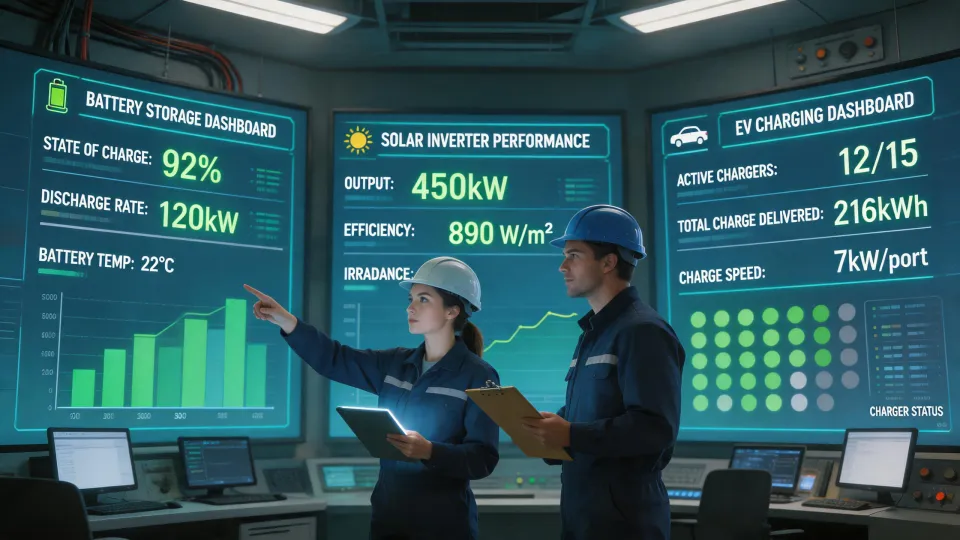
- Integrated energy management (charger talks to our solar array + battery storage)
- OCPP 1.6 compliant (future-proof for grid services)
- Remote diagnostics (supposedly reduces on-site service calls by 40%)
- 5-year warranty included
Total cost of ownership over 5 years? Let's do the math:
- Vendor A (lowest hardware): $5,200 + $10,000 installation + $2,000 software/year × 5 = $25,200/charger
- Huawei: $7,800 + $10,000 installation + $500 software/year × 5 = $20,300/charger
The "expensive" option saved us nearly $5,000 per charger over 5 years. Multiply by 12 units: $60,000 in total savings. Plus better integration with our solar and storage systems.
Key takeaways (if I could go back to January 2024 and tell myself one thing)
- Hardware is just the entry fee. Installation, software, and maintenance will cost more over time. Factor them in.
- Lowest quote = highest risk. I've seen this pattern in 60% of my purchases. Cheaper upfront often means hidden costs, poor support, or lock-in.
- Ask about software. Can the charger integrate with your existing systems? Is it OCPP compliant? What happens if the vendor goes out of business?
- Get a site assessment before you budget. A $500 assessment can save you $10,000+ in surprises.
- Total cost of ownership matters more than unit price. This sounds obvious, but when you're staring at a $17,000 spreadsheet difference, it's easy to forget.
This pricing was accurate as of Q1 2024. The EV charging market changes fast—especially with new incentives and technology. Verify current rates and incentives before budgeting. And for heaven's sake, don't just look at the hardware cost.
I almost did. Would've cost us.
Ask a related engineering question