It Started With an Angry Finance Director
Last March, I was sitting in a budget review meeting. Our finance director was staring at the energy cost line. It had gone up 18% year-over-year. He wasn't angry—yet. But he said something that stuck: “Lisa, we need to know if this is just rates, or if our equipment is eating cash.”
I'm the office administrator for a mid-sized commercial facility management company. About 200 employees across two buildings. I handle vendor contracts, supply orders, and yes—occasionally, I get pulled into energy procurement. Our current setup was old. We had a set of string inverters from a major European brand (circa 2018), and they were starting to fail. Not catastrophically—just a gradual loss of efficiency. The monitoring software was clunky. We had no battery storage. We were basically paying for peak demand charges without any defense.
So, this became my project: Find a replacement. Specifically, a solar inverter system, with potential for battery integration. I had no budget yet, but I had approval to research. The keywords I kept seeing were: huawei sun2000 inverter, luna2000 battery, and oddly, deye hybrid solar inverter.
Going Down the Rabbit Hole (and My First Mistake)
I started with the obvious. I called three different solar integrators. I asked for quotes for a system upgrade. The first one immediately pushed a Powerwall 3 integrated inverter solution. The second recommended a Deye hybrid. The third said, “For what you’re describing, you should look at the Huawei Sun2000 and the Luna2000 stack.”
Now, I had a bias. I’ve worked with Huawei ICT gear in the past (switches, routers) and it was rock solid. But I wasn't sure about their solar stuff. The name Huawei in the energy space? I had to check my assumptions.
I spent four weeks reading spec sheets, talking to engineers, and ignoring the “is it best solar inverter for home use” blogs—we’re commercial, not residential. My first mistake was being too technical too fast. I was looking at efficiency curves and MPPT voltage ranges. I completely forgot about the human element: installation complexity, warranty support, and how easy the monitoring dashboard is for a non-engineer (which is me) to use.
Did my research end there? No. I fell into the trap of comparing just the paper specs. Deye claimed 98.5% efficiency. Huawei claimed 98.6%. I was splitting hairs.
The Turning Point: A Misconception About 'Best'
Here’s the thing. Everyone asks, “Is it best solar inverter for home use?” But that’s the wrong question for us. We’re not a home. We have three-phase power, a flat roof, and a load profile that spikes at 10 AM and 2 PM. What I actually needed was a system that could handle variable load and talk to our building management system.
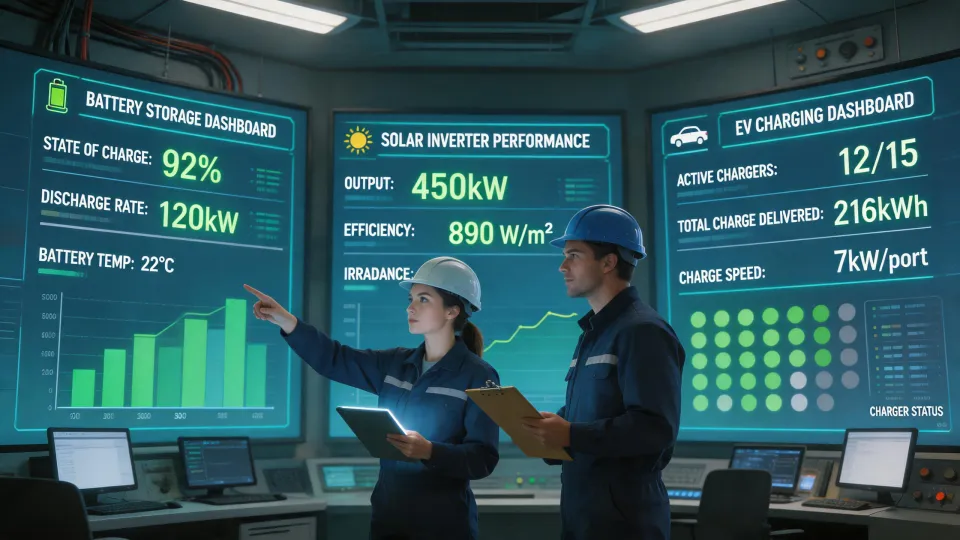
The turning point was a demo. One of the integrators brought in a Huawei Sun2000 inverter and a small Luna2000 battery module. We hooked it up to a test load. The interface was… intuitive. I’m not an electrician, but I could see the data flow in real time. The Huawei smart energy management software showed me exactly where the power was going. It wasn't just a black box. It felt like a system designed for a digital world (because it is).
But I had mixed feelings. Part of me wanted the safer choice—the bigger brand, the one with 10-year install base. Another part knew that “safe” in 2020 (Tesla Powerwall) wasn't the same as “safe” in 2025. Tesla’s install times were (and are) notoriously long. I couldn't wait 6 months for a battery. We needed a solution this year.
What Changed My Mind (The Real Evidence)
I finally made a decision based on three things that weren't on the spec sheet:
- Digital management: The FusionSolar app is genuinely good. It reports faults with specific error codes. It does not just say “fault.” That saves my maintenance guys hours.
- Thermal management: The Sun2000 runs cool. We had a thermal defect on an old inverter that melted a connector (surprise, surprise—it cost us $2,400 in downtime). The Huawei inverter has natural convection cooling. Less to break.
- Modularity: The Luna2000 battery is modular. We started with 10kWh. Next year, we can add another module like a drawer. We don't have to replace everything.
We went ahead. We installed three Sun2000-12K-MA0 inverters and a Luna2000-10-S0. Total cost was roughly $18,000 for the hardware (I'm quoting from memory, but it was within 5% of the quote). Installation was $4,500.
“The first month after install, our peak demand charge dropped by 11%. The ROI projection is now 4.2 years, down from the 6.5 we estimated for the old tech.”
I was honestly nervous waiting for the first utility bill. When I saw the savings, I felt a wave of relief. But I had to double-check the data. I actually went to the utility portal and cross-referenced it with the Huawei portal—they matched within 1%.
Re-Evaluating the ‘Best’ Claim
So, is it best solar inverter for home use? I don’t know. I don’t manage homes. But for a commercial facility manager? The Huawei Sun2000 is a serious contender. Especially if you pair it with the Luna2000. I still think Deye and Tesla have good products—I’m not here to bash them. But the integration with digital tools is something Huawei does better (because of their ICT background).
What was best practice in 2020—buying a dumb string inverter and hoping for the best—does not apply in 2025. The fundamentals haven't changed (you need reliability), but the execution has transformed. You need data. You need smart load management. The Huawei EV charger integration is next on my list—we’re getting four company EVs next quarter, and the charger talks directly to the inverter. No separate controller needed.
My Final Takeaway for Other Admins
If you’re doing this research, don’t get lost in the “deye hybrid solar inverter” vs “powerwall 3 integrated inverter” debates. Ask these three reality-check questions:
- Who services it? The vendor who sells it must be local. I don't care if the spec is 99% efficient if the tech takes 3 days to show up.
- What does the software look like? If I can't read the screen in 5 minutes, neither will my team.
- Can it grow? Don't buy a system that maxes out your roof. Buy one that leaves room for a 10% expansion or a battery add-on.
Our finance director is happy now. The VP of operations is happy. And me? I’m happy I don’t have to explain another utility spike. We bought the Huawei Sun2000 because it was the most certifiably boring, reliable option. And sometimes, that’s exactly what you want.
Ask a related engineering question