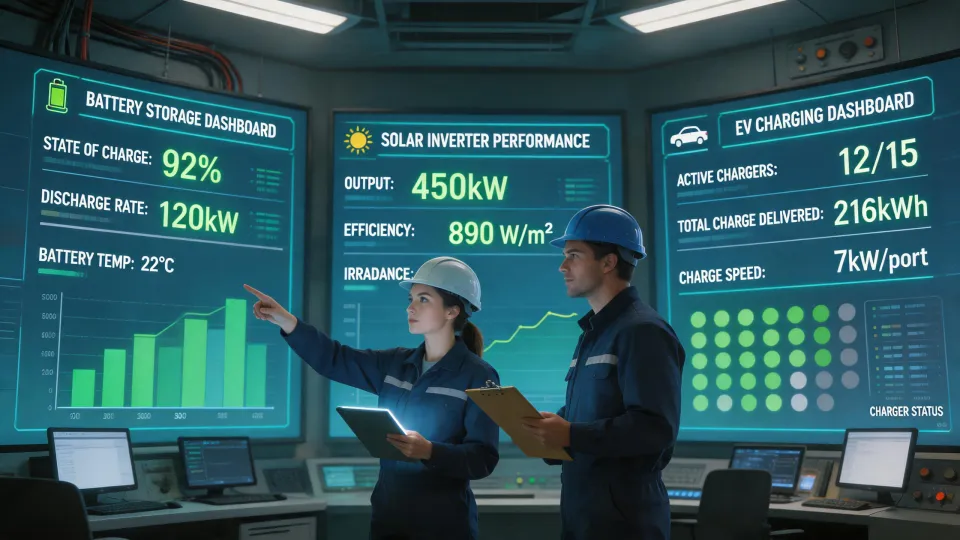
I manage purchasing for a mid-sized commercial real estate firm—about 400 employees across three locations. When we started shifting toward on-site solar + storage, I had to learn the hardware fast. Here’s what I wish someone told me upfront, based on the last two years of specs, quotes, and a few mistakes.
1. Where can I find official specs for Huawei inverters and batteries?
Straight to the source: huawei.com/solar (the enterprise section). That’s where you’ll find datasheets for the Sun2000 series—efficiency curves, voltage ranges, MPPT details. The technical documentation is solid, but I’ll warn you: navigation can be a maze. I usually bookmark the “Digital Power” product page. For UL-listed LiFePO4 batteries, cross-check the model number on UL’s database before buying. Saved me once when a reseller claimed UL listing they didn’t have.
2. Why does the Sun2000 inverter get recommended so often?
Two reasons: efficiency and digital integration. The Sun2000-xxx series hits up to 98.6% efficiency (datasheet confirmed). More importantly, it pairs with Huawei’s cloud-based energy management system. For a facilities manager like me, that means real-time monitoring of each array and battery bank—no separate gateway needed. I’ve had fewer field service calls since deploying these vs. older inverters. (Note to self: always check firmware compatibility with your battery BMS before ordering.)
3. What’s the big deal about UL listing for LiFePO4 batteries?
Insurance compliance, mostly. Our underwriter requires UL 1973 or 9540 for any stationary storage over 20 kWh. Without it, liability coverage jumps. For a 48 volt 200ah lithium battery (about 10 kWh), UL listing also guarantees the safety testing—thermal runaway, overcharge protection, short circuit. I once skipped verification on a “UL equivalent” claim. That battery failed after six months. Cost us $4,000 in replacement and a delay. Now I demand the actual UL file number in the quote.
4. When does a 48V 200Ah lithium battery make sense commercially?
It’s a sweet spot for medium-scale backup. Think: 2–5 kW loads for 4–8 hours. In our retail building, two 48V 200Ah LiFePO4 stacks handle emergency lighting, security, and a small telecom closet. Much cleaner than a diesel generator—no fuel storage, no exhaust, quieter. The catch? Sizing matters. We initially under-sized (one battery) and discovered during a blackout that the inrush current tripped the BMS. We added a second unit in parallel. That’s where modular systems like Luna2000 shine: you can start small and scale.
5. Solar battery vs. generator—which should a commercial facility choose?
It’s not either/or. For short outages (under 8 hours) and frequent events, battery wins: instant transfer, zero emissions, lower maintenance. For long, multi-day outages or very high surge loads (like elevators), generator is still king. What I’ve settled on: battery for critical loads + generator for full building backup. Huawei’s system can switch between them automatically. But check your local fire code—some AHJs require a physical interlock. I found that out the hard way during our 2024 permit review.
6. Is the Luna2000 storage system worth the premium over generic batteries?
Depends on how you value integration. Luna2000 modules are designed to talk directly with Sun2000 inverters—no third-party gateway, no compatibility headaches. The stackable design means we added capacity in three hours on a Saturday. Generic 48V batteries? They’d require a separate inverter charger and a BMS with CAN bus comms that may or may not work. I have mixed feelings paying the premium (about 15–20% over generic), but the reduced installation time and single-vendor support have saved us money in the long run. For a turnkey project, it’s a no-brainer.
7. How do I ensure quality from a sourcing perspective?
Funny you ask—that’s exactly where my perspective shifted. Early on, I focused on price. Then a client complained that the inverter enclosure had visible rust within a year. The invoice savings evaporated when we had to replace the unit. Now I require:
- Official warranty certificates (10 years for inverter, 10+ years for LFP battery)
- Factory audit reports or ISO 9001 certs
- Field references from similar installations
Quality is your brand’s extension. A cheap inverter that fails does more than cost money—it makes your company look amateur. This pricing was accurate as of Q4 2024; verify current rates before budgeting.
Ask a related engineering question