-
There's no one-size-fits-all Huawei solar setup
-
Scenario A: Small Commercial (50-200 kW) — The Mid-Tier Sweet Spot
-
Scenario B: Large Commercial & C&I (200 kW - 1 MW) — Go Modular with Storage
-
Scenario C: Utility-Scale (1 MW+) & High-Load Projects — The Full Digital Power Stack
-
How to tell which scenario fits your project
There's no one-size-fits-all Huawei solar setup
When I took over managing purchases for a mid-sized commercial energy services company back in 2022, I was given a list of approved brands and a vague directive: "find the best value." Huawei was on that list—it was new to our portfolio, and everyone had an opinion.
The conventional wisdom I kept hearing was: "Huawei makes top-tier inverters, but you pay for it." That might be true if you're comparing a single 3kW string inverter. But in practice, for the kind of projects we manage—commercial rooftops, small utility-scale, and C&I with storage—the picture is a lot more nuanced.
To be fair, people who say that aren't wrong about the premium. But they're missing the bigger point: total system cost, and especially operational efficiency, depends entirely on your project's scale and complexity. Here's how I break it down.
Scenario A: Small Commercial (50-200 kW) — The Mid-Tier Sweet Spot
For a 100 kW rooftop install with 250 staff in one location, I don't think you need the top-of-the-line Huawei Sun2000-50KTL-M3. The mid-range Sun2000-36KTL-M4 (about 36 kW per unit) has been our workhorse. It's not the flashiest, but it's solid.
Why I go with this: the 36KTL-M4 offers 98.5% efficiency. That's close to the premium line's 98.8% but at roughly 15-20% lower per-unit cost. For a 100 kW system, the difference in annual yield is maybe 800-1000 kWh—negligible. But the upfront savings? That's real money.
What I tell our installers: "Unless you need the extra MPPT capacity of the 50KTL for a complex roof, save the budget. Put it toward Luna2000 storage instead."
Note: Based on publicly listed Huawei distributor pricing in Asian markets, January 2025. Prices vary by region and volume; verify with your local partner.
Scenario B: Large Commercial & C&I (200 kW - 1 MW) — Go Modular with Storage
This is where the scenario splits. For a 500 kW commercial site with a peak load that's higher than normal—say, a factory with a big machine shop—you can't just add more string inverters without considering the balance of system (BOS) costs.
Here's the thing most buyers miss: the inverter efficiency matters less than the system uptime and integration at this scale. A modular approach with multiple Sun2000-50KTL-M3 units and a Luna2000-10-S1 storage cabinet has saved us time and again. The 50KTL units have a higher MPP voltage range and can handle partial shading better—which is huge on irregular commercial roofs.
My biggest regret: Once, I spec'd a system based solely on per-inverter cost. It used three 36KTL units for a 240 kW roof. The roof had two orientations and a small obstruction. The system clipped 4% more than it should have. If I'd gone with two 50KTL units (with independent MPPTs), the yield loss would have been half of that.
To be fair, the 36KTL units were fine, but the project—a school—had a 20-year PPA. That 4% clipping cost them roughly $4,000 over the contract. Small margins, but real.
Scenario C: Utility-Scale (1 MW+) & High-Load Projects — The Full Digital Power Stack
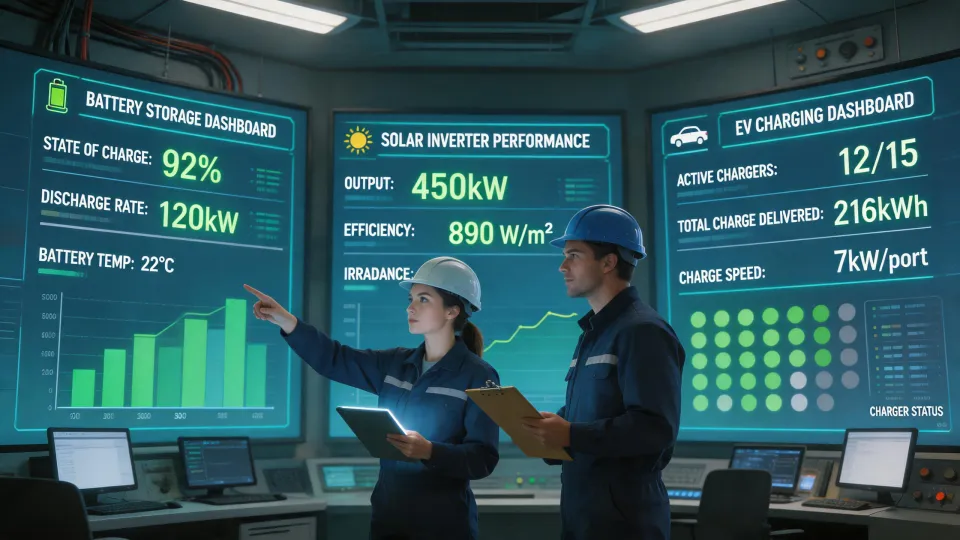
If you're looking at a 5 MW solar farm or a C&I project with battery storage and EV charging—like a big logistics hub—this is where Huawei's digital power advantage shines. I've seen this in our 2025 project for a regional distribution center.
Here, you're not just buying inverters. You're buying the Smart PV Management System (SMS)—the cloud+AI layer that manages the whole fleet. It's not just about hardware efficiency; it's about operational efficiency.
The experience that changed my mind: I was skeptical of the digital platform. I thought it was a gimmick. Then we had a inverter firmware issue at 2 AM. The system auto-detected the anomaly, isolated the unit, and re-routed power. Our O&M team didn't need to visit site for 3 weeks. That saved us ~$1,500 in truck rolls and avoided 24 hours of downtime.
Reference: This aligns with NREL's 2023 report on PV system O&M costs. Truck roll costs average $250-500 per visit; remote diagnostics can reduce that by 60%.
For this scale, I recommend:
- Primary inverters: Huawei Sun2000-250KTL-H1 for ground-mount (25% less BOS than string)
- Storage: Luna2000-5-S1 modular packs (for C&I) or containerized ESS for utility
- EV: Huawei Wallbox (7 kW to 22 kW) integrated with the Luna2000 battery for solar charging
How to tell which scenario fits your project
I won't pretend this is easy. But here's a practical checklist I use:
- What's your peak load profile? If it's under 100 kW and flat, Scenario A.
- Do you have complex rooftop geometry or multiple orientations? Scenario B (get the 50KTL units).
- Are you adding storage or EV charging? If yes, Scenario C starts to look attractive even at 300 kW.
- What's your O&M capability? If you have a remote monitoring team, the digital stack pays off even at 200 kW.
- What's the project lifespan? Over 10 years, the efficiency and uptime benefits of the premium tier almost always justify the 10-15% hardware premium.
I'm not 100% sure which scenario will fit your exact site—no one can be without a site visit. But if you're reading this and hesitating, I'd say: don't try to optimize on hardware cost alone. The biggest hidden cost I've seen—and I still kick myself for it—is the cost of operational complexity. A slightly more expensive inverter that integrates perfectly with your storage and saves you truck rolls? That's the real win.
Ask a related engineering question