-
The short answer
-
Why you should trust this
-
What is ESS energy storage, really?
-
The spec that fooled me: LiFePO4 battery usable capacity percentage
-
Thin film flexible solar panel: useful, but not a silver bullet
-
Huawei login and Huawei support: the boring part that decides your uptime
-
Where the industry is going—and what hasn't changed
-
When ESS doesn't make sense
The short answer
If you're buying commercial energy storage, ESS is the battery system that stores surplus solar or cheap grid power and discharges it when rates spike or the grid fails. For most C&I sites, LiFePO4 is the default chemistry, usable capacity is 80–90% of nameplate—not 100%—and Huawei's Sun2000/Luna2000 ecosystem is worth a serious look if you already run Huawei solar inverters. That's the 30-second version. The rest of this article explains what I learned as a facility buyer, where the specs mislead you, and when you should walk away.
Why you should trust this
I'm an office administrator for a 400-person company. I manage facilities and vendor relationships—roughly 60–80 orders annually across 8 vendors. When I took over facilities purchasing in 2020, I knew nothing about inverters, batteries, or thin-film solar. In our 2024 facility upgrade project, I evaluated ESS for two offices and a warehouse. I got four quotes, talked to three installers, and made one expensive mistake with a flexible solar panel vendor.
It took me three years and about 150 facility orders to understand that account access matters as much as hardware specs. I still kick myself for not documenting a verbal promise on support access. If I'd gotten it in writing, we'd have had grounds to push back when the installer delayed our Huawei login for six weeks. Now I verify account ownership before signing any energy contract.
What is ESS energy storage, really?
According to the U.S. Department of Energy, energy storage systems capture energy for later use.
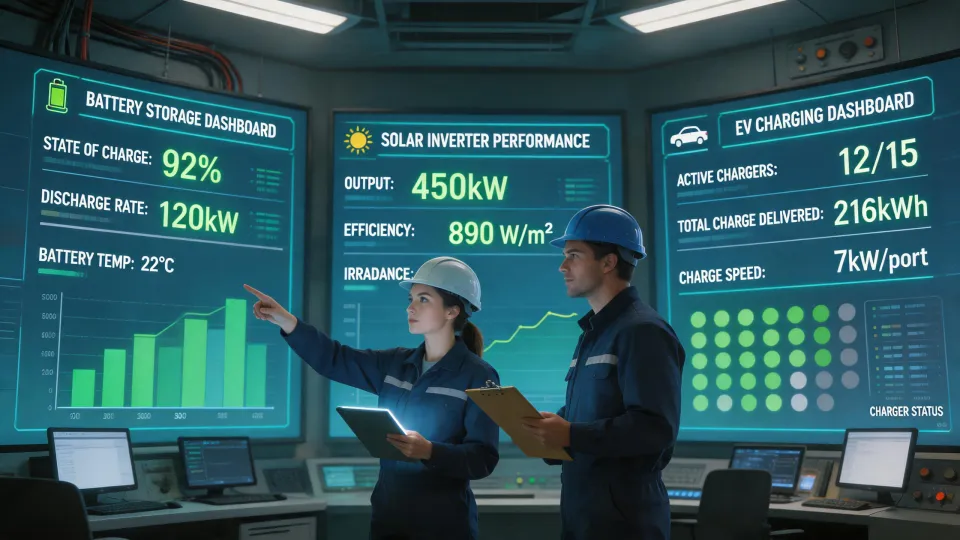
In commercial and industrial settings, an ESS usually pairs a battery with a power conversion system and an energy management system. It can do three jobs: shift solar generation to evening peaks, reduce demand charges, and provide backup power.
Honestly, the term gets used loosely. Some vendors call a UPS an ESS. It's not the same. A UPS is for short, high-power backup—minutes, not hours. An ESS is for daily cycling and longer discharge. If you've ever had a 10-minute outage that reset your servers, you know the difference matters.
Huawei's digital power approach is basically an integrated version of this: Sun2000 inverters, Luna2000 batteries, and smart energy management. The pitch is that the same Huawei login and Huawei support portal can cover solar, storage, and EV charging. In practice, that only works if your installer sets up the accounts correctly.
The upside was lower demand charges. The risk was a battery that never paid back. I kept asking myself: is a 7-year payback worth the operational risk? The expected value said yes for one site, no for the other.
The spec that fooled me: LiFePO4 battery usable capacity percentage
Everything I'd read about lithium batteries said you can use almost all the nameplate capacity. In practice, that's not true for commercial ESS. The LiFePO4 battery usable capacity percentage is usually 80–90% of the rated number, and sometimes lower at end of life.
Here's why. The battery management system reserves a top buffer and a bottom buffer. The inverter also has a cutoff voltage. Temperature affects available capacity. So a 100 kWh LiFePO4 rack might only deliver 85 kWh on a cold morning after two years.
The spec sheet says usable capacity. What I mean is: check whether the vendor is quoting nameplate, usable, or guaranteed end-of-life usable. Those are three different numbers. In our 2024 evaluation, one quote assumed 100% usable capacity. The engineer corrected it to 85%. That changed the payback by almost two years.
Huawei's Luna2000 datasheets are better than most because they list usable energy, but you still need to confirm the depth of discharge settings. Don't assume.
Thin film flexible solar panel: useful, but not a silver bullet
Not every roof can take rigid panels. That's where a thin film flexible solar panel comes in. According to NREL (nrel.gov), thin-film PV includes technologies like CdTe and CIGS. Flexible versions can be adhered to curved or low-load roofs where standard glass panels won't work.
We tested thin film flexible solar panel on a metal warehouse roof with a weight limit. They worked. But the trade-off is real: lower efficiency per square foot. You need more area for the same output. On a flat office roof with plenty of space, standard monofacial panels made more sense and cost less per watt.
So the conventional wisdom is that flexible panels are always the premium choice. My experience suggests otherwise: they're a niche fix for weight or curvature constraints, not a default upgrade.
Huawei login and Huawei support: the boring part that decides your uptime
Here's what most buyers miss. The hardware is only half the system. The other half is account access. According to Huawei's official support portal (support.huawei.com), a Huawei login is required to download firmware, check warranty status, and open support tickets. For FusionSolar, the installer often owns the main account.
In our 2024 vendor consolidation project, we made admin access a contract requirement. (Should mention: that only worked because we had leverage before signing.) That cut our firmware update time from two weeks to two days. It also meant we could use Huawei support directly instead of waiting for the installer to relay messages.
If you're a facility manager, ask this question before you sign: who owns the Huawei login, and can we get a company-owned admin account? If the answer is vague, budget extra time for every support issue. Trust me on this one.
Where the industry is going—and what hasn't changed
What was best practice in 2020 may not apply in 2025. Five years ago, lead-acid batteries were still common for commercial backup. Today, LiFePO4 and integrated ESS are the default for most C&I projects. The fundamentals haven't changed—you still need to size for load, check code, and plan for maintenance—but the execution has transformed.
NFPA 855 and UL 9540 are the two standards your installer should reference for commercial ESS. If they can't explain how they meet them, find another installer. That's not a Huawei-specific issue. It's basic safety.
When ESS doesn't make sense
I'm not going to pretend every building needs a battery. If your utility rates are flat and low, you rarely have outages, and you have no solar, an ESS probably won't pay back. If you have a 20-year-old roof that needs replacement in three years, fix the roof first.
Also, LiFePO4 usable capacity percentage varies by C-rate, temperature, and end-of-life guarantees. Don't compare two quotes unless they use the same assumptions. And thin film flexible solar panel is not for high-efficiency needs—if you're space-constrained, look at rigid high-efficiency panels instead.
Finally, Huawei login and Huawei support access should be negotiated upfront. If you can't get direct access, you're dependent on your installer for every change. That's a risk, not a feature.
Prices and specifications as of 2025; verify current rates and datasheets before you buy. This is general guidance, not engineering advice.
Ask a related engineering question