The comparison I wish I'd run before signing anything
I'm a procurement manager at a 240-person commercial facilities company. I've managed our energy infrastructure budget ($480,000 annually) for 7 years, negotiated with 30+ vendors, and documented every order in our cost tracking system. In Q2 2024, we needed to upgrade a 1.2 MW commercial site with solar, battery storage, and EV charging. We narrowed it to two approaches: Huawei's integrated digital power ecosystem (Sun2000 inverter, Luna2000 battery, Wallbox EV charger, smart energy management) versus a piecemeal multi-vendor setup (separate inverter brand, third-party battery, local electrician for EV charger).
I started by reading Huawei solar news and their official site to understand their 2024 product lineup. This isn't a fanboy review. I'm a cost controller. I care about TCO, hidden fees, and whether the thing actually gets commissioned before my tax credit deadline. Here's the framework I used: total cost of ownership, delivery certainty, and integration/expansion. I'll compare both options across each dimension.
Dimension 1: Total cost of ownership (TCO) and solar panel tax credits
Upfront, the piecemeal approach looked cheaper. Vendor A quoted $148,000 for inverters and batteries. Local electrician quoted $22,000 for EV charger installation. Total: $170,000. Huawei's integrated quote came in at $186,000. That's a $16,000 difference—about 9%.
But I've been burned by hidden fees before. In 2023, I audited our spending and found that 23% of budget overruns came from coordination costs: multiple vendors blaming each other, redoing conduit, extra permits. So I built a TCO spreadsheet.
For the piecemeal setup, hidden costs included: $4,500 for a separate energy management gateway, $3,200 for additional wiring and labor because the inverter and battery didn't communicate natively, $1,800 for a second permit revision, and $2,000 for extended warranty on mismatched components. Total hidden: $11,500. The real TCO: $181,500.
Huawei's $186,000 included integrated monitoring, one warranty, and pre-configured communication. The gap shrank to $4,500—about 2.5%.
Then there's the federal solar Investment Tax Credit (ITC). According to the U.S. Department of Energy (2024), the ITC remains at 30% for systems placed in service through 2032. Both setups qualify, but the piecemeal approach had a risk: if the battery and inverter weren't certified together, our tax accountant warned we might need extra documentation. Huawei's official site lists the Sun2000, Luna2000, and Wallbox as part of a unified ecosystem—cleaner for auditors.
Verdict: The piecemeal option is not as cheap as it looks. For us, the TCO difference was under 3%. Not enough to justify the coordination headache.
Dimension 2: Delivery certainty and the time premium
Here's the thing: speed, compatibility, warranty. Pick two. In our case, we had a hard deadline—December 31, 2024—to lock in the 30% ITC at the current rate. Missing it would have cost us roughly $55,800 in tax credits on a $186,000 system.
The piecemeal approach had a local electrician near me EV charger quote. He was fairly cheap—$22,000. But when I asked for a guaranteed commissioning date, he said, 'As soon as possible.' I heard 'whenever convenient.' Result: he scheduled us two weeks later than promised because of another job. NEC Article 625 requires a licensed electrician for commercial EV charger installation; that part was fine, but scheduling certainty wasn't.
I said 'as soon as possible.' They heard 'whenever convenient.' Result: a two-week delay that almost pushed us past the ITC deadline. That was a $55,800 risk for a $2,000 savings.
Huawei's certified installer network quoted a 6-week delivery with a contractual commissioning date. They charged a $4,800 rush fee to guarantee it. I approved it. Even after choosing Huawei, I kept second-guessing. What if I could have negotiated the rush fee? The three weeks until commissioning were stressful. Didn't relax until the system passed inspection and we locked in the tax credit.
Look, I'm not saying rush fees are always worth it. I'm saying that in a deadline-driven project, the premium buys certainty. The value of guaranteed turnaround isn't the speed—it's the certainty. For event materials, knowing your deadline will be met is often worth more than a lower price with 'estimated' delivery. Same logic applies to energy infrastructure.
Verdict: For commercial projects with tax credit deadlines, pay for delivery certainty. The downside of missing a deadline is likely 10x the rush fee.
Dimension 3: Integration, expansion, and the wind turbine question
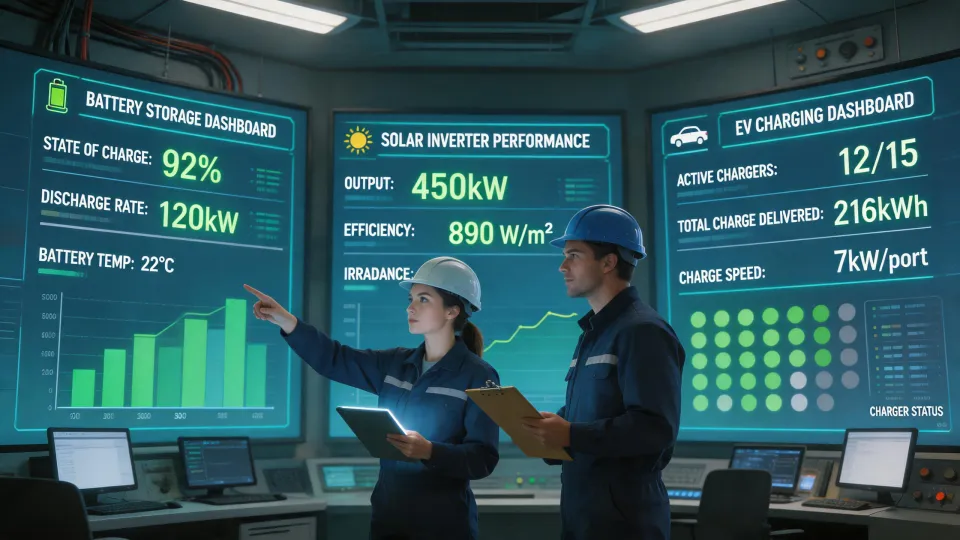
Integration is where Huawei pulled ahead—but with caveats. The Sun2000 + Luna2000 + Wallbox system communicates over a single dashboard. We can prioritize solar for EV charging, use battery for peak shaving, and monitor everything via Huawei's cloud. That's probably worth the 2.5% TCO premium alone.
The piecemeal setup would have required us to stitch together three apps and a separate gateway. Not impossible. Just more failure points.
Now, the keyword that brought many of you here: how to wire a wind turbine to a battery. We considered adding a small wind turbine later. I assumed any battery could accept a wind charge controller. Didn't verify. Turned out Huawei's Luna2000 is designed for PV and AC-coupled storage, not direct wind input. You can't just wire a wind turbine to it. You'd need a separate charge controller, and even then, compatibility with the battery management system is questionable.
I learned never to assume 'battery is battery' after almost buying a wind turbine that wouldn't talk to our system. If you're planning a hybrid wind + solar + storage setup, check Huawei's official site or ask their support for AC coupling specs. The piecemeal approach might actually be more flexible for DIY wind projects—if you're willing to manage the complexity.
Context matters: this worked for us, but we're a mid-size B2B facility with predictable loads. If you're an off-grid residential user with a wind turbine, the calculus might be different. You might prioritize flexibility over integrated warranty.
Verdict: Huawei wins for integrated solar + storage + EV charging. For hybrid wind projects, verify compatibility first—or expect extra hardware and engineering hours.
Final recommendation: which one should you choose?
After tracking 14 vendor evaluations over 7 years, I can only speak to our context. Here's the scenario-based advice:
- Choose Huawei's integrated ecosystem if: you're a commercial facility, need to claim solar panel tax credits without audit headaches, want one warranty and one dashboard, and have a hard deadline. The 2-5% TCO premium is usually worth it.
- Choose a piecemeal multi-vendor setup if: you're off-grid, plan to wire a wind turbine to a battery yourself, have no deadline pressure, and enjoy managing multiple contractors. You might save 2-3% upfront, but budget for coordination costs.
For us, the Huawei route cost about $4,500 more in TCO. But we got a guaranteed commissioning date, a single throat to choke, and a clean tax credit documentation package. That's a trade I'd make again.
Certainty. That's what you're buying.
Ask a related engineering question