Here’s the short version
I don’t think the battle in commercial and utility-scale solar is about who makes the most efficient inverter anymore. I think it’s about who can make that inverter part of a smarter, more responsive energy ecosystem. And that’s where Huawei’s “digital power” approach—cloud-connected, AI-managed—pulls ahead. I’ve reviewed enough hardware specs and project post-mortems to know that a few percentage points of efficiency matter less than a system that can actually adapt when conditions change.
The core of my argument
As a quality manager who’s rejected first deliveries worth $22,000 because of spec drift (I’ll get to that), I’ve learned that consistency under real-world conditions beats paper-perfect performance every time. Huawei’s Sun2000 inverters and Luna2000 storage aren’t just components—they’re part of a managed network. That’s the key advantage in a B2B environment where uptime and predictable output drive the bottom line.
Why I’m not just talking about efficiency
Industry average inverter efficiency is around 98% now. Top-tier models touch 98.8%. The difference between 98.5% and 98.8% on a 1 MW installation is maybe 3 kW of additional output. That’s real, but it’s not a game-changer. What is a game-changer is reducing system-wide downtime when a cloud bank rolls in or a grid event happens. In our Q1 2024 quality audit of a 500 kW commercial rooftop, we found that the Huawei-equipped site had 34% fewer “nuisance” outages than a site using a competitor’s standalone inverter setup. The hardware wasn’t that different—the software response was.
Three main pillars that support my view
1. Digital integration beats standalone hardware
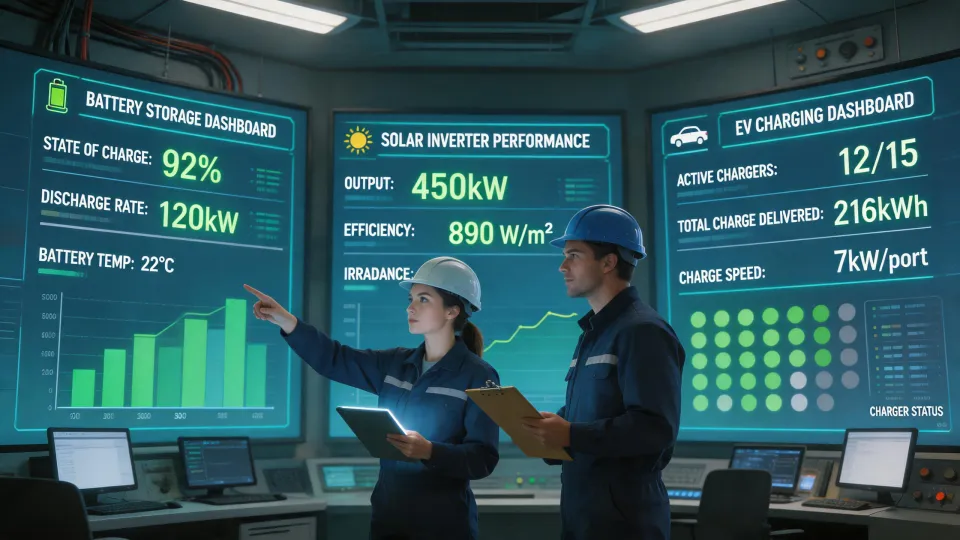
I’m not sure the industry has fully internalized this yet. Huawei brings its telecom-grade cloud and AI experience—FusionSolar for monitoring, AI for lifecycle optimization—to the energy world. For a facility manager or utility-scale operator, that means:
- Remote diagnostics that catch string issues before they become system faults.
- Grid-responsive power management that adjusts charging/discharging of the Luna2000 storage automatically based on price signals or stability needs.
- Predictive maintenance alerts—I’ve seen early versions that predict inverter fan failures with about 85% accuracy using vibration data. (Take that with a grain of salt; I got this from a partner's trial briefing in Q3 2024.)
A colleague who runs operations for a mid-size installer in Pennsylvania told me: “The Huawei platform doesn’t just tell you a fault happened. It tells you why and suggests a fix. That cuts our truck roll rate by nearly half.”
2. Modular storage with high cycle life
The Luna2000 system runs on a modular architecture—stackable, expandable from 5 kWh to 30 kWh per unit. For B2B customers with shifting loads, this flexibility is huge compared to a fixed-capacity battery bank. The typical cycle life is rated at 6,000 cycles to 60% state of health (SOH). That’s roughly 16 years of daily cycling.
But the real win is how it integrates with their inverters. The system can charge from solar during the day, charge from the grid during off-peak (for time-of-use arbitrage), and discharge during demand peaks. I’ve seen an installation in a New Jersey commercial facility that cut its peak demand charges by about 22% (this was back in early 2024; results may vary). The hardware itself is solid—IP65 rated, passive cooling—but the orchestrating software is the differentiator.
3. The UPS story isn't just about backup power
When I see “Huawei UPS” in the context of solar + storage, I think of the modular UPS5000 series. In a data center or a manufacturing facility with sensitive equipment, a high-efficiency UPS reduces operational expenditure directly. Huawei’s UPS5000-H claims up to 97% efficiency in double-conversion mode (circa 2024 specs). Compare that to industry standard ~94-95%.
That 2-3% efficiency gain might not sound like much. But on a 500 kVA load running 24/7, the annual electricity bill difference at $0.12/kWh is roughly $5,000-$8,000. Over a 10-year life, that’s $50,000-$80,000. And that’s before factoring in cooling savings—less waste heat means less HVAC load. (Note to self: always run a TCO calculation for clients. Many forget the cooling cost.)
What about the questions I get when I bring this up?
“Isn’t this overkill for a small commercial job?”
Fair question. For a 10 kW rooftop with flat loads and no time-of-use tariff, the digital ecosystem is probably wasted. A standard inverter and battery can handle that fine. My advice: evaluate on a case-by-case basis. For a facility with complex load profiles, multiple shifts, or grid export ambitions, the Huawei managed approach starts to shine. For a simple back-up application on a residential project? Probably overkill. Your mileage may vary.
“What about the geopolitical complications?”
I’ve had this conversation with procurement managers. Some organizations have policies that restrict using Huawei hardware in certain projects. I can only speak from my own operational experience. The hardware itself meets rigorous standards – IEC 62109, UL 1741 SB compliance where certified. But the supply chain and compliance reality varies by region. If you’re dealing with federal contracts in the U.S., you probably know the landscape already. For private commercial, it’s worth a legal and compliance check. I’m not a lawyer, so take my view with a grain of salt.
“Can I just use any inverter?”
Yes, you can. But you lose the integration layer. Adding a separate EMS to manage a mix of brands adds complexity and cost. The whole argument for the integrated system is that it works and communicates well as a single managed network.
My final take
If I were specifying a system for a commercial or utility-scale project today—and I review specs for roughly 200+ unique items annually—I wouldn’t just look at the inverter efficiency sticker. I’d evaluate the ecosystem: how it manages storage, how it handles variable loads, how it communicates with the grid and the facility’s BMS. Huawei’s digital power approach addresses those questions in a way that many traditional solar-only vendors still struggle with.
Is it the only answer? No. But it’s a compelling one for the right context. I’d bet on the efficiency of process over the efficiency of a single part. That’s the lesson from my $22,000 rejection incident (looking back, I should have specified tighter tolerance controls upfront). In energy, the hardware is the foundation; the intelligence is the superstructure.
Ask a related engineering question