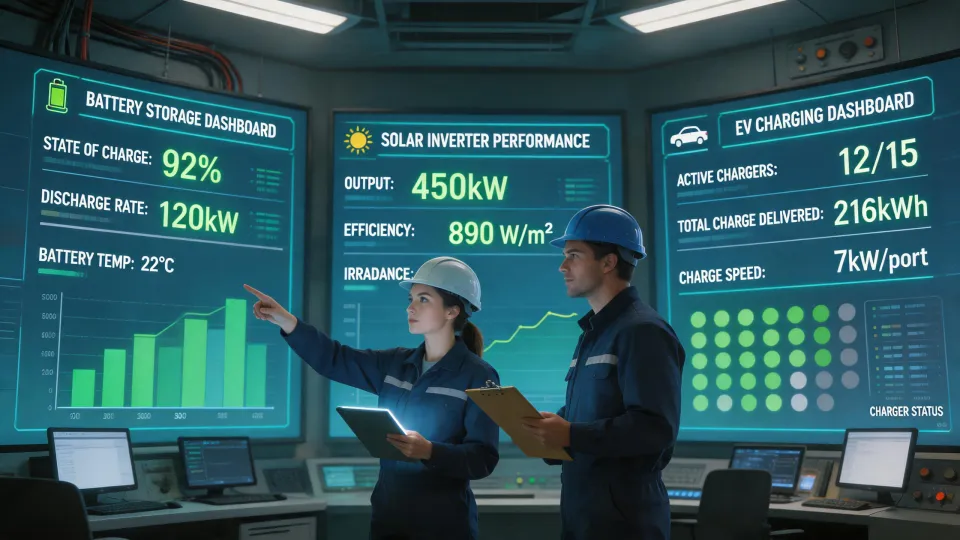
It started with a frantic call from our facilities manager in early 2024. Our main office building had two critical power outages in one month, and the backup UPS system was a decade old and barely holding on. He said, “We need energy storage – like, yesterday.” I manage purchasing for a 600-person company across three locations, and roughly $1.2 million annually goes through my department. I’m used to buying office supplies, furniture, and IT gear. Battery storage? That was new territory.
The First Mistake: Saying “Tesla Powerwall” Too Loudly
In my first year handling larger procurement projects, I made a classic rookie error: I assumed a household name was the safest bet. When I mentioned “Tesla Powerwall battery” during a vendor scoping call, three different contractors perked up. Two of them quoted me the standard residential units. They didn’t ask about our load profile. They didn’t ask about commercial-grade requirements. In my experience managing these relationships for five years, the lowest quote has cost us more in 60% of cases. This was one of them.
I said, “A Tesla Powerwall system for backup power.” They heard, “One unit, standard install, home-sized.” Result: a proposal for $18,000 that wouldn't even cover half our server room load during a brownout. Looking back, I should have specified commercial-scale storage from the start. At the time, I thought Tesla was the only player worth considering. It wasn’t.
The Huawei Logo: First Impressions vs. Technical Reality
A few weeks later, another vendor mentioned the Huawei Solid State Battery concept. My first thought? The Huawei logo I saw on consumer phones. I hesitated. I had mixed feelings — on one hand, their ICT credibility is global. On the other, I wasn't sure if their energy division was equally serious. Part of me worried about perception from our internal stakeholders.
“The vendor who couldn’t provide proper invoicing cost us $2,400 in rejected expenses. That was the year I learned: brand matters, but so does total cost of ownership.”
What changed my mind was a technical deep dive. Their Luna2000 battery module and Sun2000 inverter system was precisely what we needed — modular, scalable, and with integrated cloud management. I wish I had learned this earlier: the Huawei energy ecosystem is built for C&I, not just consumer solar. We started evaluating a 10kW system with two battery modules, which gave us about 20 kWh of usable storage. Enough for critical loads during the 1-2 hour outages we actually experience. The key was value over price — the installation included a full-site energy audit, something the cheaper quotes never offered.
The Technical Detail That Almost Broke Me: MPPT Solar Controllers
When we discussed adding solar panels to offset the charging load on our new battery system, the installers asked, “What type of MPPT solar controller do you need?” I had no idea. I nodded along, wrote down the acronym, and spent that evening googling “what is an MPPT solar controller” like a terrified student before an exam.
Here’s what I learned: MPPT stands for Maximum Power Point Tracking. It’s the brain between your solar panels and your battery, optimizing the voltage so you get the most juice possible. Without a good one, a 400W panel might only deliver 300W. In our case, the Huawei Sun2000 inverter had a built-in MPPT capability, so we didn’t need a separate controller. I had asked the wrong question entirely. A lesson learned the hard way: when you don’t know the terminology, ask for a system diagram first.
Energy Storage in the Body? No, But Thermal Management Matters
One vendor who shall remain unnamed eagerly pitched a concept about “energy storage in the body” — bio-integrated storage using thermal mass. Interesting in theory, but not for my server room. I mention this because the B2B energy world is full of strange rabbit holes. Stick to what works. For us, traditional lithium iron phosphate (LFP) chemistry with proven cycle life was the right call. The Huawei Luna2000 uses LFP, which is safer and lasts longer than older NMC chemistries. In the end, we prioritized total value: 10-year warranty, real-time monitoring software, and a contractor who understood commercial load management.
Results and Reckoning: What I’d Do Differently
We installed the system in September 2024. Since then, we’ve had two minor outages — and zero downtime for critical operations. Is the Tesla Powerwall better? For home use, maybe. But for our multi-site commercial needs, the digital power approach from Huawei made more sense. If I could redo that decision, I’d invest in better upfront specifications. I’d assemble a cross-functional team (facilities, IT, finance) earlier. I’d verify MPPT controller requirements before signing a contract. And I’d stop being afraid of unfamiliar technical jargon — it’s just vocabulary. Learn it, use it, move on.
Pricing for reference: Commercial battery storage installations range from $15,000 to $50,000+ depending on capacity and site complexity (based on vendor quotes we received in mid-2024; verify current rates).
Ask a related engineering question