Ask three installers how to build a solar storage system around Huawei equipment, and you'll get three different answers. That's not sloppy engineering. It's because the right answer depends on where you're starting from. I say this after reviewing roughly 200 system documents a year—maybe 180 in a slow year—as a quality manager for a renewable energy equipment supplier. In our Q1 2024 quality audit, I rejected 11% of first submissions due to incorrect CT placement or missing wiring details.
The question 'Should I buy a Huawei battery?' has no blanket answer. You need a scenario map. I've split this into three common situations: existing solar looking for storage, a new solar and EV build, and a DIY off-grid charge controller job. If you're not sure which one applies, jump to the last section.
- Scenario A: You already have PV and want to add battery storage.
- Scenario B: You're starting fresh with solar, storage and EV charging.
- Scenario C: You're wiring a solar charge controller yourself.
Scenario A: You already have solar and want to add a battery
You have PV panels, an export arrangement, and you want to store the excess electricity. In 2020, the standard answer would have been an AC-coupled battery installed behind the existing inverter. As of January 2025, that is still true for some sites—but not all. If your existing solar inverter is a Huawei Sun2000, then a Luna2000 storage system can communicate through the same FusionSolar portal. If your inverter is from another manufacturer, a third-party AC battery may be simpler. To be fair, a third-party battery can work with a Huawei inverter if the right gateway is installed, but it's extra integration risk.
When comparing battery storage companies UK installers, don't start with the price per kWh. Start with the warranty and the CT placement. From the outside, two quotes look identical: a lithium battery, an inverter and a gateway. The reality is that the system design—where the CT clamp goes, whether the battery can read generation and consumption accurately—determines whether it actually saves money.
People assume a larger battery lowers bills just by storing more energy. Actually, savings come from the control logic and tariff alignment. A 5 kWh battery charging from a 4 kW array at lunchtime can be more valuable than a 10 kWh battery that charges all afternoon when you can't export. A bigger battery can even make things worse if it sits at a high state of charge and loses standby energy.
During commissioning, ask one question: whose name is the Huawei login registered to? The FusionSolar app is the main dashboard for Sun2000 and Luna2000 systems. If the account belongs to the installer, site owners can lose access when that contractor stops answering the phone. Set up your own Huawei login before the installer binds the battery to your account. A frequent point of confusion is the Huawei app name: it's FusionSolar, not the consumer HiLink app.
I have mixed feelings about smart energy features. On one hand, the app alert genuinely helps you spot a failed string. On the other, a forgotten Huawei login can lock the homeowner out for months. That's not a product flaw; it's a commissioning flaw. Some UK battery storage companies require MCS certification for export tariffs. As of January 2025, MCS rules are still evolving; verify the latest version before signing.
Scenario B: New solar, battery and EV charging
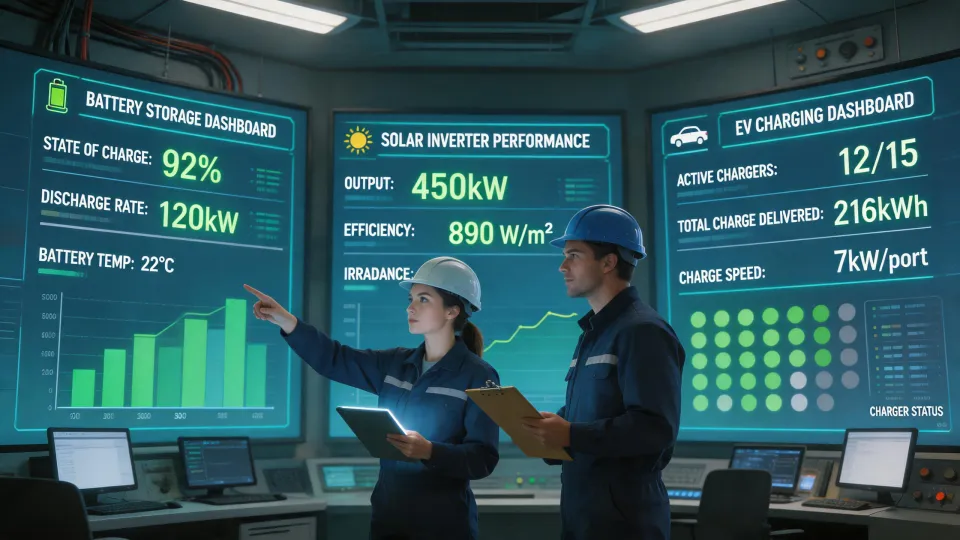
If you're building from scratch and you own an EV, the Huawei ecosystem can make life easier. A hybrid Sun2000 inverter, a Luna2000 battery and a Mobile Wallbox 11 kW can appear on the same screen. That isn't just for convenience. It means the charger can use surplus PV generation, and the battery can stop the charger pulling from the grid during peak hours.
Reality check: the Mobile Wallbox 11 kW rating assumes three-phase input. On a typical UK single-phase supply, the charge rate will be limited by the supply and the charger's configuration—often to 7.4 kW on a 32 A circuit. I've reviewed more than a few tender documents quoting '11 kW charger' on a single-phase site—or rather, I've rejected them. It wasn't the charger's fault. The spec simply didn't match the electrical supply. Check the datasheet and your distribution network before you commit.
For a new system, download the FusionSolar app before installation. The Huawei login for the app is separate from a consumer Huawei ID; keep a record of it in your operations and maintenance manual. I want to say the app now has time-of-use scheduling in the UK, but don't quote me on that—features vary by region and software version. Verify it during commissioning.
If a UK battery storage company is supplying the equipment, ask for the single-line diagram before you pay. A proper supplier should be able to show you exactly where the CT clamp goes and which breaker feeds which device. The best installations I've seen have a handwritten marking on the consumer unit and a signed-off wiring checklist.
As of 2025, DC-coupled hybrid systems have become the default for new builds. A hybrid inverter with DC-coupled storage is often more efficient than a separate AC-coupled battery because the solar and battery share one conversion stage. But don't assume that means you can skip the backup load question. The hybrid inverter may not support backup loads unless a specific sub-panel and earthing arrangement is installed. That nuance is often missed in sales conversations.
Scenario C: How to wire a solar charge controller (safely)
First, a disclaimer: I'm not an electrician. I've scrutinised enough wiring diagrams to know what I would check, but final wiring has to comply with the IET Wiring Regulations (BS 7671, 18th Edition, Amendment 2, effective 2022). This gets into code territory. If you're not confident, ask a qualified installer to review it.
Having said that, here's what I look for before approving a small off-grid or van system with a solar charge controller.
1. Connect the battery first. Most MPPT charge controllers need the battery connected before the solar panels. Why? They sense the system voltage from the battery. If the panels are connected first, the controller sees a high open-circuit voltage and may start in the wrong mode or refuse to start at all. Not every controller behaves the same, so check the user manual. The sequence I want to see is battery, then controller, then load, then PV.
2. Fuse the battery line. The wire between the battery and charge controller should have a DC-rated fuse or breaker as close to the battery as possible. An AC MCB is not a substitute. The fuse protects the wire, not the controller. People think solar panels are the fire risk. The reality is the battery is the one with enough current to melt things.
3. Polarity and torque. Reversed battery terminals can destroy the controller within seconds. Double-check before switching on. Tighten the terminal screws to the specified torque—loose terminals cause heat and voltage drop. I've seen a solar system underperform because a terminal screw wasn't tight; it wasn't a component issue.
4. PV wiring. Check the maximum PV voltage on the controller's datasheet. On a 12 V system, many MPPT controllers allow a much higher array voltage than the battery voltage, so you can use thinner cables and keep panel strings in series. But 48 V systems have different limits. Use the correct cable size for the current and distance, and fit a DC isolator between the panels and controller.
To be fair, cheap charge controllers have improved a lot. Lithium presets are now common, so you don't need an external BMS module for basic charge control. But some fundamentals haven't changed: correct connection order, fusing and torque. What was best practice in 2020 may not apply in 2025, but these rules still do.
Which scenario are you in?
Not sure? Here is a quick guide.
- Scenario A: If you already own a PV array and want to store energy, focus on inverter compatibility, UK battery storage companies' warranty terms, and the Huawei login for the FusionSolar app.
- Scenario B: If you're planning solar plus a battery plus EV charging from the ground up, the Mobile Wallbox 11 kW is a good option only after you confirm your supply and the Huawei app's scheduling features.
- Scenario C: If you're wiring a small off-grid system, a van, a shed or a remote cabin, the charge controller manual is your bible. Follow the wiring order.
At the end of the day, quality isn't just the brand of the inverter or battery. It's the documentation, the CT placement, the right fusing and the owner's login details. I'd rather sign off a modest system with a clean wiring diagram than a high-end system with a 40-page troubleshooting handbook. There's something satisfying about a system that just works—and that satisfaction starts with choosing the right scenario.
Ask a related engineering question