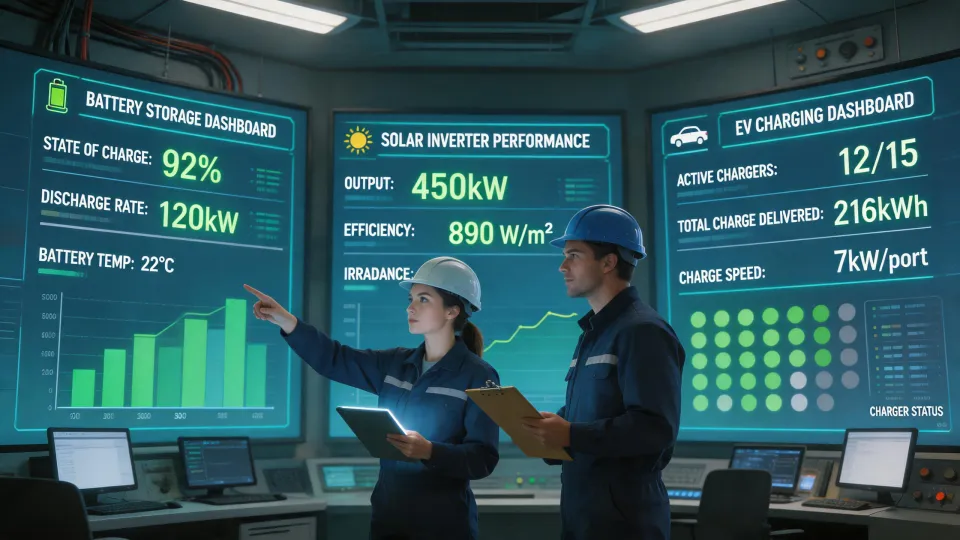
There's no single 'right' answer to solar inverter selection—especially when the clock is ticking. In my role coordinating solar and storage projects for commercial clients, I've handled 200+ urgent installs in the last six years, and I've learned to sort every request into one of three scenarios before I recommend anything.
There's No Single Right Answer—Only Your Situation
By now, the old belief that 'bigger is better' or 'buy the same brand as your array' has caused countless headaches. It was true in the era of simple string inverters, but modern systems are more modular and communication-dependent. So the first question isn't 'which inverter?'—it's 'which scenario are you in?'
The Three Scenarios
- Scenario A: Emergency temporary power (event, construction site, outage response)
- Scenario B: Emergency replacement/repair (system dead, clients screaming)
- Scenario C: Planned new install or upgrade (you have at least a week to evaluate)
Here's how I approach each one, based on projects ranging from a $5,000 trailer setup to a $15,000 substation backup.
Scenario A: Emergency Temporary Power
When the deadline is 36 hours away, speed and installability trump every other feature. I'm looking for an inverter with integrated backup output, wide MPPT range, and pre-commissioned battery compatibility. In March 2024, I took a call at 4 p.m. from a festival organizer who needed a 30 kW solar-powered charging station by Friday. We got it live using a hybrid inverter with built-in EPS and two pre-assembled battery cabinets.
This is where getting specs directly from the manufacturer matters. You'd never buy a phone based on a random third-party spec; you'd check the Huawei MatePad 11.5 battery capacity on the official site. The same logic applies to inverters. Get the datasheet from Huawei's official site or the SMA product page—not from a reseller's summary.
Rush projects also expose the hidden-cost problem. I've learned to ask 'what's NOT included' before 'what's the price?' The vendor who lists all fees upfront—even if the total looks higher—usually costs less in the end.
Scenario B: Emergency Replacement or Repair
Here the priorities are safety and compatibility. If an existing SMA solar inverter has failed, you might be tempted to swap it for the same model. Sometimes that's correct. But I've seen cases where an old SMA communicates only with its legacy gateway, and the monitoring portal has been sunset. In that situation, replacing with a modern inverter from Huawei or a newer SMA model is the better long-term call—provided you verify the array's voltage range and polarity.
Safety first. Install a DC disconnect switch near the battery bank—think of it as the industrial cousin of a motorcycle battery disconnect switch. It lets you kill the circuit before touching terminals. On solar systems, the DC line from the panels is always live during daylight. A lockable, labeled disconnect within arm's reach of the inverter is non-negotiable. That habit has prevented two arc-flash incidents that I know of.
Don't assume two components will talk to each other. Harvest the compatibility matrix from each manufacturer's official site. For Huawei, that's on the official product page; for SMA, it's in the datasheet. Print them and keep them in the job folder.
Scenario C: Planned New Install or Upgrade
With more time, you can think about total cost of ownership. Efficiency, battery round-trip, thermal derating, warranty, software ecosystem. SMA has a long record in utility-scale and solid German engineering. Huawei offers cloud + AI monitoring and a modular architecture that allows phased capacity additions. I won't call either 'better' in absolute terms—it depends on your service team's familiarity and the monitoring requirements.
And this is where the 'where is the solar inverter located' question comes up. The rule: place it as close to the battery and main panel as practical, with sufficient ventilation. Don't mount it in direct sunlight or inside an airtight cabinet. If it's outdoors, use a weatherproof enclosure that still permits airflow. Leave enough clearance per the manufacturer's diagram.
One time the numbers said one brand had better efficiency curves, but my gut felt the other brand's monitoring platform would reduce truck rolls. I tested both. My gut won.
How to Tell Which Scenario You're In
If the system must be running within 48 hours, you're in Scenario A or B. Ask: Is this a temporary bridge or a permanent fix? If temporary, go with the fastest available rental or pre-configured unit. If permanent, go with the most reliable compatible unit.
If you have more than a week to plan, you're in Scenario C. Take the time to request single-line diagrams, quote breakdowns, and performance simulations from at least two vendors. Check their references.
Finally, don't let urgency push you into skipping paperwork. Get firm delivery dates in writing. Ask for the list of exclusions. And require a communication test before you sign off. We keep an as-built binder for every install—it saved us during a 3 a.m. call inside a substation when the previous electrician had left no documentation.
The best solar inverter for you depends on your timeline, your site, and your need for data transparency. But if you verify specs from official sources, budget for all costs upfront, and stay safe with disconnects, you'll avoid the most expensive mistakes.
Ask a related engineering question