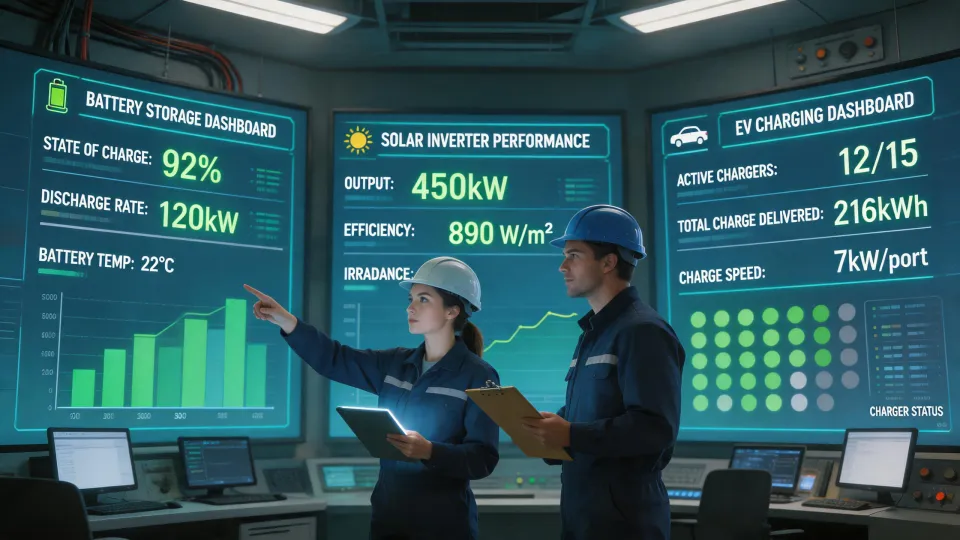
Bottom line: buying a Huawei lithium battery or a Huawei EV charger is 30% product and 70% installation. The hardware will probably work exactly as advertised. What turns a routine job into a 4am emergency is everything around it: the physical weight of the battery, the marine battery disconnect switch you forgot to order, the Huawei app login you can't set up, and the cost of running cable to the EV charger. If you're on a deadline, plan the install first. Then order the parts.
I'm not saying that from a marketing brochure. I'm the person who gets the call when something doesn't fit, won't boot, or can't be energized on time.
Why you should trust these details
In my role coordinating emergency installations for a renewable energy company, I've triaged more than 120 rush jobs over the past three years. In March 2024, a client called at 4pm with an inverter down 36 hours before a utility inspection. We got a Huawei Sun2000 inverter to the site the next morning, but the real race was the electrical work and app configuration. Missing that window would have delayed their permission-to-operate by 45 days. That kind of pressure changes how you decide what to check first.
What to know about the Huawei lithium battery and the Huawei app
Luna2000 is modular, but it's not light
Huawei's lithium battery line, the Luna2000, is a modular LiFePO4 storage system meant to pair with Huawei's Sun2000 inverters. The modularity is real: you can start with one 5 kWh module and expand later, and Huawei's published specs show the system handles that cleanly. But the datasheet doesn't tell you how to get the module up a staircase or whether your wall can take the weight. I've spent an entire day building a mounting bracket because nobody checked the wall first. That's the detail that kills timelines.
The Huawei app: set it up before installation day
The Huawei app for this ecosystem is called FusionSolar. You use it to monitor production, set backup levels, check battery state of charge, and apply firmware updates. It's not optional if you want the smart features. But here's the one thing I see over and over: people wait until the installer is standing at the panel to create their account. If the email verification doesn't arrive, or the password reset fails, the whole install stops. Set up the Huawei app days before your installer arrives, and make sure you have access to the site's project code.
The 12V 200Ah LiFePO4 weight question
Now, if you're working on a boat, an RV, or a small off-grid shed, a home battery might not be the right answer. The Luna2000 is a high-voltage system. The 12V world runs on a different electrical setup, and that's okay. What matters there is physical fit.
Here's a question I get often: “What's the heaviest 12v 200ah lifepo4 battery weight?” The heaviest units I've seen in the field are around 31 kg (68 lb) with a steel case, a heating pad, and a robust BMS. A normal aluminum-cased 200Ah LiFePO4 battery weighs more like 24–26 kg (53–57 lb). That doesn't sound like a big deal until you're lifting it into a tight locker.
And this is the counterintuitive part: the heaviest battery is sometimes the safest choice. Extra weight usually means more protection and better thermal management. On a marine project last season, I went back and forth with a customer about a steel-cased 200Ah battery. It was six kilos heavier, but it could handle vibration and had a cold-weather heater. We chose the heavy one. Looking back, I should have measured the locker before ordering. The extra weight was fine, but the extra 15 mm on the mounting sides meant a new tray, and we lost an afternoon. On a two-day deadline, that's a lot.
Don't skip the marine battery disconnect switch
While you're in that battery locker, look at the cut-off. A marine battery disconnect switch is the manual switch that kills DC power between the battery bank and the loads. It's what lets you work on the system without unbolting terminals. It also gives you a way to stop power fast if something starts smoking. In a salt-air environment, the switch takes a beating. I've seen a cheap automotive-style switch corrode into a paperweight after one season. A proper marine-rated switch costs $30–100, and it can be the difference between a clean service call and a dangerous one. Don't skip it to save budget.
How much does it cost to install a EV charger?
Every week, someone asks: “How much does it cost to install a EV charger?” The short answer, based on US projects I've been involved in and public installer estimates as of Q1 2025: expect $500 to $1,800 for labor and electrical materials for a standard Level 2 installation, not including the charger hardware. The charger itself can range from $400 to $1,500. If your existing panel has no space, add $1,500 to $4,000 for a panel upgrade or subpanel. If the charger location is 100 feet of conduit away, that run alone can be $2,000 or more.
Huawei's Wallbox is a legitimate option in this space, and its smart features work with the same app you're already using for the battery. But the brand of the charger matters a lot less to the final cost than the distance to the panel. That's counterintuitive but true: a discount charger placed far from the panel can end up costing more in total than a premium charger mounted right next to it. I'd rather see a customer spend $300 more on hardware and $800 less on labor.
A quick checklist for a tight install
Here's what I check before any rushed solar or EV project, and what you should check too:
- Weight and dimensions of the battery vs. the mounting wall and floor.
- Huawei app access and the login for the project site.
- Marine battery disconnect switch, if this is a boat or off-grid application.
- Conduit distance for the EV charger, and which panel it will feed.
- Permit or inspection lead times in your town.
The last one is the one people forget. A EV charger on a house wall may not need a permit in some places, but in commercial buildings it usually does. If the inspector has a 10-day waiting list, your 48-hour timeline just died.
Where this advice has limits
I can only speak to my context: US-based utility-interactive solar, marine/RV retrofits, and commercial EV charging, mostly with Huawei products. If you're building in Europe, Australia, or anywhere with different grid standards, the product numbers, app features, and labor rates will be different. The Huawei app also varies by region and inverter model. And the EV charger pricing I quoted was accurate as of early 2025. Labor rates change, permits change, and material costs change. Verify everything with a licensed electrician before you give someone a deadline.
And read this as “I learned this the hard way,” not as “Huawei is the only brand that works.” There are other good systems out there. But if you're planning Huawei lithium battery storage, a Huawei Wallbox, and the Huawei app on a real calendar, these are the details that will make you look good or leave you scrambling.
Ask a related engineering question