You've probably read a few Wallbox 11kW 16A Air reviews by now. Most of them cover the same ground: specs, app, cable quality, and whether the unit looks good on a garage wall. They're fine reviews. But they miss the part that actually matters—what happens when something goes wrong at the worst possible time.
That's the part I deal with. I coordinate emergency EV infrastructure installations for a living. In eight years, I've handled 120+ rush jobs—fleet operators whose new electric vans arrive before the chargers are live, facility managers facing a five-figure penalty if their charging point stays down. So when I compare the Wallbox 11kW 16A Air with Huawei's approach, I'm comparing them the way I wish online reviews did: under pressure.
What We're Actually Comparing
The Wallbox 11kW 16A Air is a standalone Level 2 charger. Well-built, genuinely popular, and for a lot of people, completely sufficient.
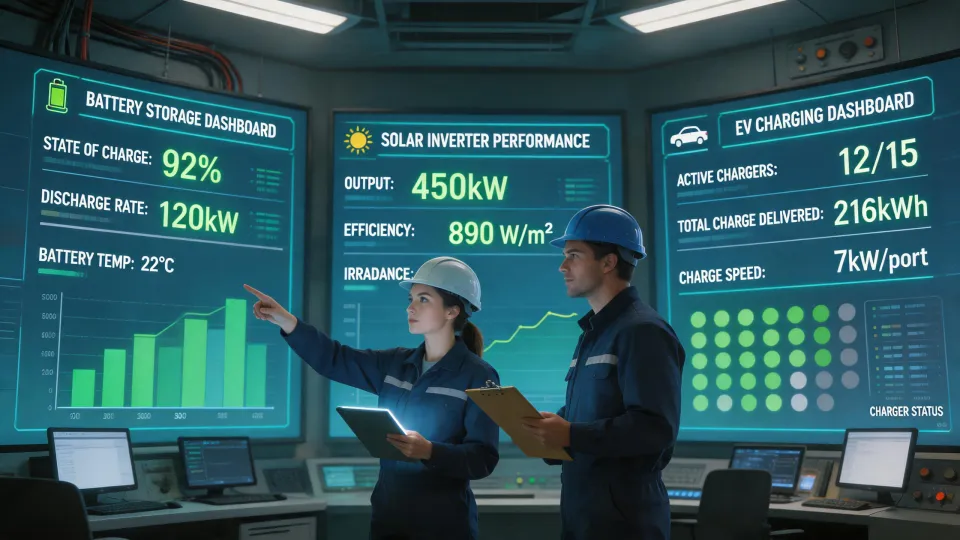
Huawei's charging equipment takes a different route. The charger is designed as one part of a digital power ecosystem that includes solar inverters, Luna2000 battery storage, and Huawei UPS units for backup power—all managed through one platform.
These are two different philosophies. So I'm going to compare them across four dimensions that I care about when I'm standing on a site with a deadline:
- Hardware—build quality and real capability
- Software—the app vs. the Huawei login experience
- Resilience—what happens when the grid fails
- Installation reality—what it's actually like to get them live
Dimension 1: Hardware—Polish vs. System Thinking
The Wallbox unit delivers a genuine 11kW on three-phase at 16A. It's compact, the cable management is well-thought-out, and it has that finished feel that explains why so many reviews call it the best-looking charger in the category.
Huawei's charger is just as solid, but it's built to disappear into a system. You notice the quality in the long-term behavior rather than the first impression. The downside is that on its own, it can feel like it's waiting for the rest of the ecosystem to arrive.
Verdict: As a standalone charger, the Wallbox is the more lovable device. But that's also the trap. Once your needs grow past a single charger, the lovable device becomes the limiting factor.
Dimension 2: Software—The App vs. The Huawei Login
Here's a difference you won't see in spec tables.
The Wallbox app is good. Start, stop, schedule, monitor—it does those things cleanly, and for a single location, I'd call it the easiest app in the category. That matters. I've recommended Wallbox to homeowners exactly for that reason.
Huawei takes a bigger swing. The "Huawei login" that people search for before they buy is the FusionSolar portal, and it's not just a charger app. You sign in and see the charger, the solar production, the battery state, and the building load on one screen. The first time I showed that to a commercial client, he said, "Oh, that's the whole building." Yes. Exactly.
The trade-off is real, though. Huawei's commissioning takes longer because you're setting up a system, not just a charger. After a 2023 job where a firmware update stalled and burned three hours of our buffer, I now always book extra time for Huawei software setup on installs. The Wallbox never needed that.
But here's what happens after commissioning. I've seen clients use that FusionSolar data to shift charging into off-peak windows and cut their energy costs by about 20%. The Wallbox app gives you a charging log. The Huawei login gives you an energy strategy.
Verdict: For one charger, Wallbox's app is friendlier and that's a genuine advantage. For a business managing energy, the Huawei platform is in a different league.
Dimension 3: Resilience—Where Huawei UPS Changes Everything
Most reviewers never test this dimension, because most reviewers aren't the one getting a 2am call after a power cut.
Here's the truth about standalone chargers: if the grid goes down, the charger goes down. For a homeowner waiting to charge overnight, that's an inconvenience. For a business with delivery vans, it's a missed route, a customer refund, and maybe a contract penalty.
This is where Huawei's ecosystem thinking reveals its edge. Huawei makes UPS systems—the same continuous-power technology that keeps data centers alive—and the Luna2000 battery can be paired with the charger so that an outage doesn't stop charging.
I watched this play out on a commercial site in 2024. The power dropped overnight, and the client's three vans charged anyway, because the UPS kept the control systems running and the battery fed the chargers. A standalone Wallbox on the same site would have gone dark.
To be clear: I'm not saying every Wallbox owner needs a UPS. I'm saying that if your charging infrastructure has to be resilient, then you're not buying a charger—you're designing a power system. And Huawei is one of the few vendors where the UPS, the battery, the solar inverter, and the charger all speak the same language natively.
Verdict: This is the dimension that surprises people. For pure reliability under emergency conditions, the integrated Huawei system wins—not because the charger itself is superior, but because the system around it is designed for continuity.
Dimension 4: A Bangor EV Charging Station Installation That Changed My Approach
Let me give you a concrete example from March 2024.
A logistics client called on a Thursday afternoon about a Bangor EV charging station installation that had to be live in 36 hours. Three electric cargo vans were arriving Saturday morning. Normal lead time for that job: two to three weeks.
First problem: the electrical panel was behind an old diesel van that had been parked there for weeks. The client was embarrassed about it, apologizing before we even said hello. We got four people on the push-bar and moved the van by hand. Not elegant, but effective.
Then, while the electrician started on the panel, the client pulled me aside. He'd always wanted to know how to disconnect a car battery safely but was too nervous to try. That's a search I see constantly in this industry—"how to disconnect a car battery"—so here's the answer for anyone in the same position: ignition off, negative terminal first, correct wrench, and keep the tool away from the positive post. Reconnect in reverse order: positive first, negative last. It's a two-minute job when you know the order.
Anyway. We expedited the electrical certification, ran the cable, mounted the charger, and had everything commissioning by 11pm Friday. The client's alternative was three electric vans parked for a week—which would have cost far more than the rush fee.
What did that job teach me about the Wallbox vs Huawei question? On a tight deadline, the Wallbox is undeniably faster to install. Its configuration is simpler; there's less to integrate. The Huawei charger cost us an extra hour because we had to set up the FusionSolar login, the monitoring dashboard, and the energy-management rules.
But here's the part I keep coming back to. Months later, that client was still using the dashboard to shift charging loads and lower peak demand. I found myself second-guessing the recommendation at first—was the integration overkill for a small fleet? The anxiety only settled when their first utility bill showed the savings.
Verdict: For a simple site with a hard deadline, Wallbox is the pragmatic call. For a business that needs charging to perform over years, not days, the extra setup hour is the best trade you'll make.
So Which Should You Choose?
I'm not going to give you a single winner, because these are different tools for different jobs.
Choose Wallbox if:
- You need one charger for a home or a small site with no expansion plans
- You want the simplest app and the quickest installation
- Solar, storage, and backup power aren't on your roadmap
Choose Huawei if:
- You're planning solar, battery storage, or UPS backup—now or later
- You manage multiple sites or vehicles and want one dashboard
- Your operation can't afford to lose charging hours in an outage
- You'd rather pay for system-level visibility than guess in the dark
One honest boundary: I'm not an electrician, so I can't speak to code compliance or specific permit requirements in your area. What I can tell you from a project coordination perspective is that both products perform. The real question is what you're building around them.
If you're still stuck, find an installer who's done commercial work rather than home-only jobs. Ask them what it's like to fix these systems when they fail. Their answer will tell you more than any Wallbox review ever will.
Ask a related engineering question