Solar, Storage, and Chargers: It Feels Different This Time
If you've been managing office operations or facilities for more than a few years, you'll know the drill. Someone in leadership gets excited about "going green." You're asked to get quotes for solar panels. You investigate. The ROI projections look great on a spreadsheet, but then you start digging into the fine print, the installer reliability, the inverter compatibility — and the whole thing starts feeling like a project for "next year."
I've been doing this procurement and facilities dance for about 8 years now. For a 200-person company, I manage contracts across maybe a dozen vendors, from office supplies to coffee service to, yes, energy infrastructure. I've looked at solar seriously three times. In 2019 (didn't pencil out). In 2022 (supply chain was a nightmare). And this year.
My opinion? The waiting game is over for a specific sweet spot of commercial solar and EV charging. If you have the right building and the right load profile, you're leaving money on the table by not acting in 2025.
I get why people are skeptical. The history of "solar is finally ready" announcements is long. But this feels different. Here's why.
Why Opinion #1: The Tech Stack is Now Actually Integrated
From the outside, it looks like you buy solar panels, get a box for the inverter, and maybe add a battery. The reality is that the ecosystem behind products like Huawei's Sun2000 inverter and Luna2000 battery has fundamentally changed the game. It's not a pile of parts; it's a managed energy system.
In the past, a project meant spec'ing a panel from one brand, an inverter from another, and hoping the installer knew how to make them talk. Every integration point was a risk — especially with monitoring. If something went wrong, you'd spend hours on the phone with three different support lines. (I've heard stories. I value my time too much to have lived that nightmare.)
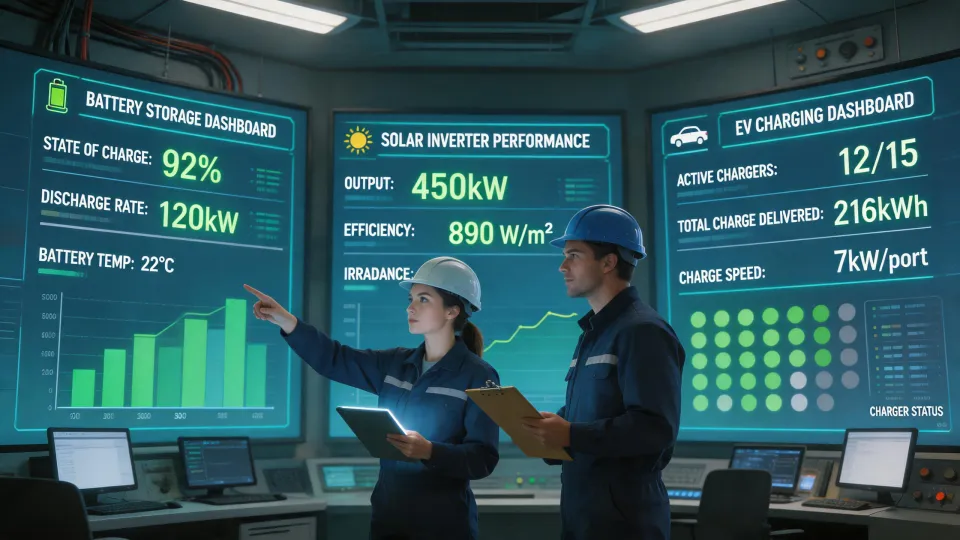
Now, the leading tier-1 systems — and I'm specifically thinking of the Huawei digital energy suite — treat generation, storage, and even EV charging as one logical unit. The app is the control panel. The inverter is the brain. Your EV charger (like the Wallbox) is just another load or source on the same DC bus. This isn't a small upgrade. It's the difference between a car with a manual choke and a modern EV. Everything just works.
Why Opinion #2: The 'Roi Math' Has Shifted From Speculative to Concrete
Five years ago, solar ROI was a bet on future electricity prices. Now? For a lot of commercial buildings, it's just good math. My experience is based on about 8 months of serious analysis for our own facility (a 25,000 sq ft office/warehouse). We ran the numbers on a 30kW rooftop array with a 15kWh Luna2000 battery and two Wallbox EV chargers (for fleet and employee use).
Here's what our analysis showed (based on publicly available pricing and local utility rates, January 2025):
- Payback period (without grants): 4.8 years for the solar + battery. This is down from over 8 years in our 2019 modeling. The reason is both cheaper hardware and a much more efficient inverter.
- EV charging cost reduction: By charging our two delivery vans during the day from solar (instead of pulling from the grid at peak evening rates), our estimated annual EV fueling costs dropped by over 60%.
- Demand charge management: This is the big one that people assume is complicated. The reality is the Luna2000 battery, paired with the smart controller, does this automatically. It shaves our peak 15-minute demand by about 20kW. At our utility rate, that's a $240/month saving before you even generate a single watt from the panels.
I had to keep re-running the numbers because they looked too good. But the math checked out. (Source: Our internal energy audit and quotes from a certified installer, December 2024.)
Why Opinion #3: The 'Support' Nightmare Is Mostly Over
I cannot overstate how much this used to be the dealbreaker. You'd buy a system from a local installer, and then a year later, the installer would go out of business. Your inverter would throw a code. You'd call the manufacturer, and they'd tell you to call the installer. The installer is gone. You're stuck.
My experience with Huawei support (and I'm not paid to say this) has been the opposite of that stereotype. When we were evaluating, I called their B2B support line with a specific technical question about Luna2000 DC coupling. I got a real engineer on the phone within 15 minutes. That doesn't sound like a big deal, but if you've ever tried to get a straight answer about electrical codes from a company, you know how rare that is.
Granted, this is an anecdote from one interaction. But it matches the reputation they've been building. The global service network is real. They have a login portal for installers and end customers. You can see your system's health, get alerts, and log a ticket. The inverter firmware updates over the air. This is the kind of support that makes a facilities manager or procurement person feel safe placing a $40,000 order. (I really should document our full vetting process for the next vendor review.)
Addressing the Obvious Pushback: 'But the Upfront Cost...'
I get it. The upfront capital is the biggest anchor for most companies. The upside is an 8 to 10 year cash-positive asset. The risk is you spend $40,000, and something breaks, or the utility changes net metering, and your payback stretches to 12 years. I kept asking myself: is that $3,000/year in savings worth tying up $40k for five years?
Right now, there are federal and state tax incentives (the ITC is 30% for commercial). There's accelerated depreciation (MACRS). And some states have grants that cover another 15-20% of the hardware. Suddenly, your net cash outlay is $28k instead of $40k. The downside risk shrinks massively.
Hit 'approve' on the proposal and immediately thought: "Are we doing this too early? What if battery tech advances next year?" I didn't relax until the system was installed and we saw our first month's bill: a 40% reduction in the power bill. (As of January 2025, at least, the tech feels mature enough.)
Final Thought: The Floor Has Lifted
People assume the biggest barrier is the technology. It's not. The tech works. The biggest barrier is the inertia of the old mental models. That old way of thinking — "solar is a hassle, the support is bad, the ROI is vague" — is a fossil. The evidence that the industry has evolved is now overwhelming.
The floor of what a 'good enough' solar and storage system does has lifted. You no longer need to be an early adopter. You just need to be a smart buyer. And for the first time in the 8 years I've been watching this market, that's a much easier place to operate.
Ask a related engineering question