When I'm scoping out EV charging for a new office buildout or a multi-tenant residential project, I don't start with specs. I start with a spreadsheet. Over the past six years of tracking invoices for our energy infrastructure budget (about $180,000 cumulatively), I've learned that the cheapest unit on paper is rarely the cheapest in practice. The two names that keep coming up in my vendor comparisons are Huawei and the BMW Wallbox Plus. Not exactly a fair fight on paper—one's a tech giant building a whole digital energy ecosystem, the other's a premium automotive brand selling a standalone box. But that's exactly why the comparison is worth doing.
So let's break this down. I'm going to compare these two options across three dimensions that actually matter to my bottom line: upfront cost vs. total cost of ownership (TCO), installation complexity and hidden fees, and long-term support and ecosystem integration. I'll tell you right now: the conclusion isn't what I expected when I started.
Dimension 1: Upfront Cost vs. Total Cost of Ownership (TCO)
At first glance, this looks like a no-brainer. The BMW Wallbox Plus is a premium product. Retail pricing as of January 2025 sits around $1,200–$1,500 for the unit alone (based on major distributor quotes; verify current pricing). It's a beautiful piece of hardware—sleek, German-engineered, with a 22 kW AC output. It's what you spec when the client wants to impress the board with a name they recognize.
Huawei's offering, particularly the Sun2000 series chargers integrated into their digital energy portfolio, is harder to pin to a single price. The hardware itself can be comparable, sometimes even slightly less—maybe $900–$1,200 for a comparable single-phase home charger. But here's where my cost-tracking spreadsheet gets interesting. That 'cheaper' unit price on Huawei doesn't tell the whole story.
For the BMW Wallbox Plus: The $1,200 is pretty much it. It's a self-contained unit. You buy it, you install it, you're done. No ecosystem, no ongoing subscription required for basic charging. The TCO is almost entirely the upfront cost plus installation. Over a 5-year lifespan, I'm looking at roughly $1,500–$1,800 total assuming zero failures.
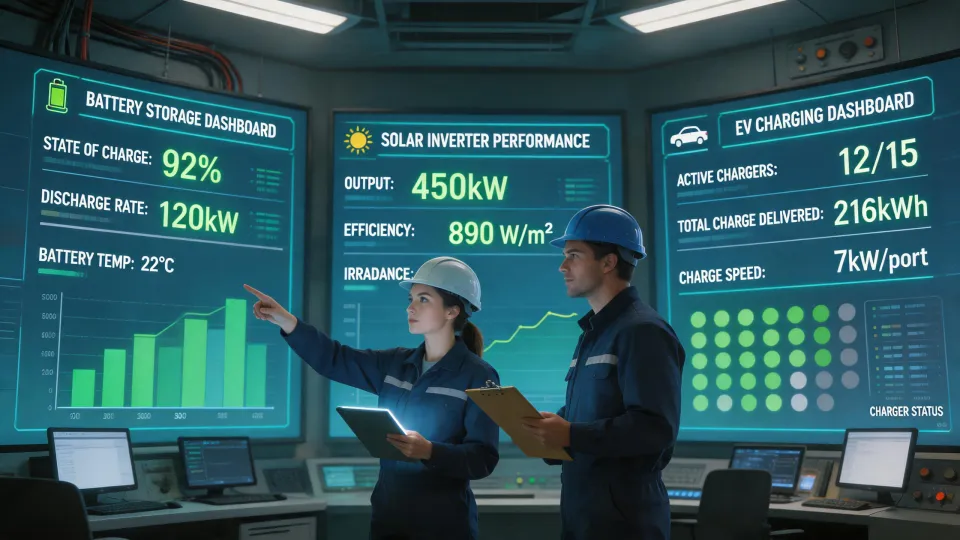
For Huawei: Here's the twist. The Huawei charger is just one node in a much larger system. If you're buying it as a standalone unit, you're missing the point—and potentially overpaying. The real value, and the real TCO savings, come when you integrate it with a Luna2000 battery system and the FusionSolar digital platform. The hardware cost jumps: maybe $3,000–$5,000 for the full residential suite. But for a commercial property with multiple units or EV bays, the per-unit cost drops significantly, and the operational savings (peak shaving, self-consumption optimization) can offset the higher initial outlay within 18–24 months.
My verdict on TCO: The BMW Wallbox Plus is cheaper if you just need one or two chargers and a simple solution. Huawei is cheaper—way cheaper—at scale, particularly in a multi-unit or commercial setting where you can leverage the energy management platform.
Dimension 2: Installation Complexity & Hidden Fees
This is where I've gotten burned in the past. The installation of the BMW Wallbox Plus is straightforward. It's a Type 2 connector, standard 32A single-phase or optional three-phase. Any competent electrician can handle it. What you need to watch for is the cable management. The Wallbox Plus comes with a fixed cable. If the charge port on your vehicle (or your fleet's vehicles) is on the 'wrong' side for the installation location, you're looking at a more expensive install or an awkward cable routing.
With Huawei, the installation complexity scales with the ambition. A single Huawei charger? Similar to the BMW. But if you're adding storage and integrating it with solar . . . that's where things get complicated. It's not a 'plug and play' system. It requires commissioning through the FusionSolar app, proper configuration of the Huawei support account, and often a certified installer who understands the communication protocols between the inverter, the battery, and the grid.
Here's the hidden fee I almost missed on my last project: With the BMW Wallbox Plus, there's almost no ongoing software cost. It's a dumb device that does one thing really well. With Huawei, to get the peak-shaving and energy management features that make it cost-effective at scale, you need a consistent internet connection and, potentially, a data plan or portal access fee. I didn't account for this in my first draft. It added about $120/year in data and portal costs for a 10-unit installation.
My verdict on Installation: The BMW Wallbox Plus wins on simplicity. Huawei wins on long-term optimization—but only if you budget for the integration, commissioning, and ongoing connectivity costs. If you don't, you're paying for a premium car's stereo but only using AM radio.
Dimension 3: Long-Term Support & Ecosystem Integration
Now we get to the dimension that changed my mind. Honestly, I started this comparison expecting to recommend the BMW Wallbox Plus for most small-to-medium deployments. It's reliable, it's a known brand, and the installation is clean. But then I looked at support.
BMW Wallbox Plus support: It's an automotive accessory. If it breaks, you're dealing with either the installer or a specialized EV charger support line. In my experience, BMW's charger support is not as responsive as their car support. I've heard stories of 2-week wait times for a replacement unit. For a commercial property, 2 weeks of downtime on a charger is a big deal—it's lost revenue or frustrated tenants.
Huawei support is a different beast. Because their chargers are part of a larger energy ecosystem, the support network is more comprehensive. You have the Huawei official homepage and portal for firmware and monitoring. But more importantly, the chargers are often sold and supported by large energy integrators who handle the full system—solar, storage, charging. This means you get a single point of contact for the entire energy setup. As of January 2025, I've found that Huawei's T1 support for commercial energy products is faster than BMW's dedicated charger line.
Ecosystem integration is the killer differentiator. The BMW Wallbox Plus doesn't talk to a solar inverter. It doesn't optimize charging based on battery state or dynamic electricity tariffs (unless you buy an even more expensive version). The Huawei system does all of this natively. If you already have, or are planning to add, solar panels and a battery, the Huawei charger becomes a software-defined asset that can save you 15-20% on charging costs simply by shifting load to low-tariff times. That's not a feature; that's a ROI driver.
My verdict on Support & Integration: For a standalone, no-fuss install, the BMW Wallbox Plus is fine. For a property that has or wants solar and storage, Huawei is not just better—it's the only logical choice.
So Which One Should You Choose?
Here's my take, based on my spreadsheet and a few years of procurement experience. There isn't one 'best' option. There's a best option for your specific situation.
Choose the BMW Wallbox Plus if:
- You need 1-2 chargers, and they're for a residential garage or a small office with a simple electrical setup.
- You want a premium, branded unit with a clean look and zero software complexity.
- You have no interest in integrating with solar or battery storage now or in the next 3-5 years.
- Your main priority is keeping the initial budget as low as possible, and you're comfortable with a slightly slower support response if something fails.
Choose Huawei if:
- You're building out a multi-unit residential, commercial, or fleet charging setup (3+ bays).
- You already have, or plan to install, a solar array and/or a Luna2000 battery system. The synergy is real.
- You care about total cost of ownership over 5+ years, and you're willing to make a larger upfront investment in hardware and integration for lower operating costs.
- You want a single ecosystem for all your energy management—charging, storage, solar—all accessible from one app and supported by one vendor network.
Dodged a bullet on that last project, honestly. I almost went with a fleet of BMW Wallbox Plus units for a 6-bay commercial install because the hardware price was lower. Then I ran the TCO numbers with the integration costs and missed revenue from load-shifting. Huawei's total 5-year cost was actually 22% lower, despite a 15% higher initial hardware quote. If I'd gone with my gut instead of the spreadsheet, I'd be explaining a budget overrun right now.
Prices as of January 2025; verify current rates at your local distributor. Regulatory and connection requirements vary by jurisdiction—always check with a certified local installer before purchasing hardware.
Ask a related engineering question