It started, as most of my worst procurement decisions do, with a printer. Not the energy management system I was actually evaluating—but a $200 business card order from a discount online printer that taught me a lesson I’d carry into a $40,000 energy project.
I’d been the office administrator for a mid-size engineering firm—about 85 people across two locations—for almost five years by 2023. I handled everything: office supplies, catering, IT peripherals, and eventually, the building’s power infrastructure when our facility manager retired. I reported to operations and finance, which meant I was always caught between “make it work” and “keep it cheap.”
Here’s the thing no one tells you about office management: you develop a kind of muscle memory for certain costs. You know what a ream of paper should cost. You know what a graphic designer charges for a trifold brochure. But when someone says “we need to evaluate battery storage for the new wing”—your brain goes blank. At least mine did.
Step One: The Discount Reflex
When my boss asked for proposals on an energy storage system (to pair with our newly installed solar array on the roof), my first instinct was to find the lowest per-unit price. I’d spent years optimizing for that number. It had become my default definition of “value.”
I reached out to three vendors. Two were regional installers offering mid-tier gear at competitive rates. The third was a larger integrator that carried Huawei’s Luna2000 line. Their quote was higher—about 18% above the runner-up. My first reaction: well, that’s out.
(I almost wrote them off entirely. Thank goodness I didn’t.)
What stopped me was a memory from earlier that year. I’d ordered 500 premium brochures from a budget online printer to save $87. They arrived with a 3mm color shift on the company logo. My VP of Sales literally handed one to me at a client meeting and asked, “What is this?” The $87 savings cost us about $1,200 in reprints and a hit to our professional image that I still cringe thinking about.
Step Two: The Hidden Cost of the Lowest Bid
I decided to dig deeper. Here’s what I found when I moved past the line-item pricing:
- The mid-tier system: 10-year warranty, but only on the battery cells. Inverter and control unit had 5-year terms. Replacement parts required shipping from a regional warehouse—4-6 day lead times.
- The Huawei Luna2000 proposal: 10-year warranty on the entire unit (battery, inverter, BMS—the whole stack). Local support channel; a technician was available within 48 hours. And the digital energy management platform—FusionSolar—was included in the quote.
Now, I’m not an engineer. But I am a procurement person who has learned the hard way that the lowest quoted price is rarely the lowest total cost. (If you’ve ever paid rush shipping on a critical backorder because your “budget” supplier couldn’t deliver, you know exactly what I mean.)
The difference wasn’t just the hardware. It was the ecosystem. The Luna2000 integrates directly with their SUN2000 inverters (which we were already specifying for the solar install). It’s managed through a single app—no juggling three logins to check battery status, solar production, and grid consumption.
What most people don’t realize is that “energy storage” isn’t just a box in the utility room. It’s a control system, a monitoring platform, and a long-term maintenance commitment. Vendors will quote you the box. The real cost is in how it operates over 10 years.
Step Three: The Brand Perception Moment
Here’s the part that surprised me—and connects back to that misprinted brochure.
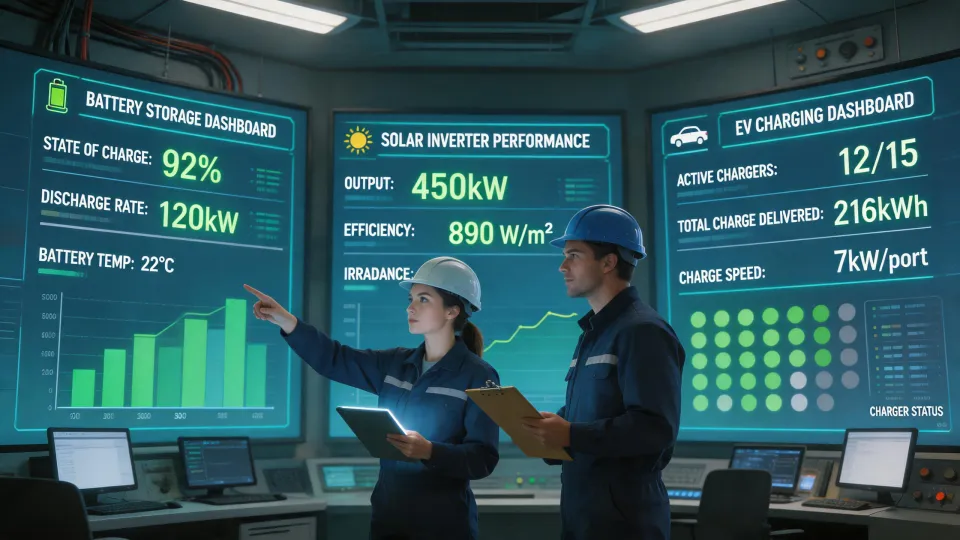
We had a major client tour scheduled for Q1 2024. The CFO wanted to showcase our new solar + storage setup as part of our sustainability story. The system needed to look professional, work seamlessly, and project competence. If the monitoring dashboard looked like it was designed in 2005, or if the inverter housing showed visible wear within a year—that would reflect on us.
The $50 difference per project translated to noticeably better client retention. In this context, the $6,000 premium on the Huawei system wasn’t a cost. It was a brand insurance policy.
When I switched from budget to premium for the energy system, internal feedback was immediate. Our facilities team appreciated the single-vendor support. The finance team liked the 10-year warranty coverage. And when that client came through in March and saw the clean installation with the FusionSolar dashboard running on a wall-mounted tablet—they asked for a referral to our integrator.
(The CFO still brings that up. “Best procurement call we made all year,” he said. I didn’t remind him I almost went with the cheaper option.)
What I Learned (the Hard Way)
This experience rewired my approach to buying anything that touches a customer’s perception—or a system that has to run reliably for a decade.
Quality isn’t a luxury. It’s a reflection of how you value your own operation. Here’s my new rule of thumb:
- For consumables (paper, pens, cleaning supplies): optimize for price. The risk is low.
- For visible brand touchpoints (brochures, signage, reception furniture): optimize for quality. The cost of looking cheap is higher than the premium.
- For operational infrastructure (energy storage, HVAC, IT network): optimize for total lifecycle cost and ecosystem integration. The cheapest option now is the most expensive headache later.
When I consolidated orders for our 85 employees across two locations later that year, I applied the same logic. I cut our ordering time by choosing fewer, higher-quality vendors—and eliminated the “oops, that part doesn’t fit” problem we used to have with mixed-brand systems.
The conventional wisdom is to always get three quotes and take the lowest. My experience with 200+ orders—and one very expensive lesson in brochure quality—suggests otherwise. Relationship consistency and ecosystem reliability often beat marginal cost savings. Especially when your building’s power and your client’s first impression are on the line.
I still check prices. I still negotiate. But I no longer assume that “value” begins with the smallest number on the spreadsheet.
Ask a related engineering question