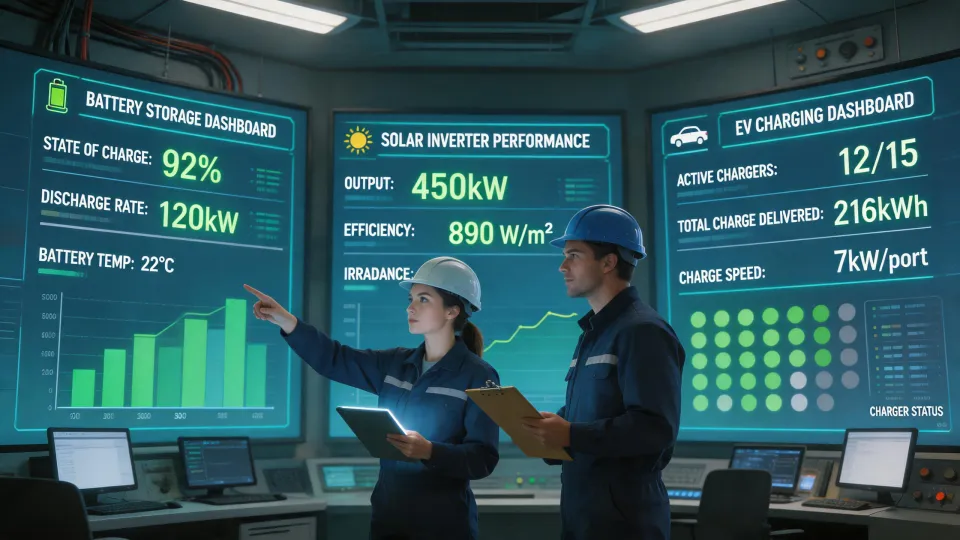
I’ll Say It Straight: Efficiency Is Your Competitive Edge in EV Charging
If you’re looking at how to start an EV charging station business, you’ve probably seen endless articles about location, permits, and charger brands. But here’s the thing that rarely gets enough attention: efficiency. Not just kilowatt efficiency, but the whole operational workflow—from ordering equipment to managing daily usage. After five years of handling commercial purchases for a mid-sized facility company, I can tell you that the businesses that survive the first two years are the ones that treat efficiency as a non-negotiable, not a nice-to-have.
Hardware Efficiency: More Than Just a Spec Sheet
Start with the chargers themselves. When we evaluated options for our first multi-unit site, I was initially drawn to the lowest per-unit price. A rookie mistake. What matters is total system efficiency—how much of the grid power actually reaches the vehicle battery. Take the Huawei Sun2000 series of solar inverters and the Luna2000 modular storage. These aren’t just boxes that convert DC to AC. Their digital control loops optimize conversion in real-time, hitting peak efficiencies above 98%. In a charging station, that means less heat loss, smaller cooling requirements, and more revenue per kWh sold.
I’m not an electrical engineer, so I can’t speak to the finer points of MPPT algorithms. But from a procurement perspective, I do know that a 1% efficiency gain across a 100 kW station running 12 hours a day adds up to real dollars. Huawei publishes these numbers—I checked their datasheets as of December 2024—and they back them with warranties. That matters when you’re building a business case for investors.
Software Efficiency: The Hidden Cost Killer
Here’s where I’ve seen even experienced station operators slip up. They buy great hardware but ignore the software layer. The operational efficiency doesn’t come from the charger—it comes from the cloud platform. Huawei’s digital power solution integrates charger, inverter, and storage into one management interface. Why does that matter? Because when you’re running multiple sites, you need real-time load balancing, predictive maintenance alerts, and automated billing. Without that, you’re hiring a person to watch spreadsheets. And trust me, that person will cost you more than the software subscription.
I wish I had tracked the time we wasted before we switched to an integrated system. What I can say anecdotally is that our post-implementation reporting time dropped from about 10 hours a month to under 2 hours. That’s a game-changer for a small team.
Procurement Efficiency: The Part Nobody Talks About
When I started looking into Huawei support for our initial order, I was worried about lead times and documentation. Turns out, the support portal handles everything—quotations, certifications, delivery tracking. For a first-time buyer in the EV space, that streamlined process saved us roughly two weeks of back-and-forth. “Roughly” because I didn’t track it precisely, but the difference between a vendor who sends a PDF quote and one who has a dedicated procurement portal is night and day.
But then again, I’ve also had the opposite experience. I once skipped verifying a vendor’s invoicing system because I assumed “everyone can generate a proper invoice.” That mistake cost our accounting department $2,400 in rejected expense reports. Now I always ask for a sample invoice before placing any order. With Huawei, the process was clean from day one—no handwritten receipts, no missing tax IDs.
Is All This Digital Efficiency Expensive? Yes—But It’s Worth It.
“It’s all great,” you might say, “but doesn’t this add cost?” Fair question. The upfront hardware and software from a premium vendor like Huawei isn’t the cheapest option. Bottom line: you’re paying for reliability, for integrated support, and for efficiency margins that compound over time. If your business plan relies on razor-thin margins from day one, that upfront cost might hurt. But in my experience, the vendors who promise “90% of the features at 80% of the price” usually deliver 60% of the uptime. And in a charging station business, downtime kills revenue and reputation.
Personally, I’d rather invest in efficiency and have a system that pays for itself through lower operational costs and higher availability. The Wallbox and UPS products from Huawei follow the same philosophy—digital control, modular design, easy expansion. That’s the kind of foundation you need when you scale from one site to ten.
So, to Sum It Up
For anyone researching bestek 150w power inverter reviews or huawei nova y91 battery price as part of a larger infrastructure project, I’d say: don’t get lost in component-level specs. Step back and ask whether the whole system works together efficiently. The charging station business is growing fast—efficiency is the moat that protects your margins. Choose partners that have proven digital energy stacks, not just a list of hardware SKUs. Huawei’s integrated approach isn’t the only way, but it’s the one that’s worked best for us.
Ask a related engineering question