I review about 200 renewable energy products a year—inverters, chargers, batteries—and I've rejected roughly 12% of first deliveries in 2024 because of issues most buyers never think about. Not performance failures. Not efficiency gaps. Things like connector tolerances that were 0.2mm off spec, or firmware versions that didn't match the documentation. Details that, if they reached a customer's site, would mean returns, field service calls, and reputational damage.
So when I hear people ask 'which EV charger plug type should I get?' or 'where can I buy a 16kW solar system cheap?'—I wince. Because the common narrative focuses on the wrong things. The industry has evolved faster than most buyers' mental models. What worked as a purchasing shortcut in 2020 is outdated in 2025.
The Big Misconception: Brand and Price Aren't the Real Differentiators
In my Q1 2024 quality audit, I compared EV chargers from three unnamed brands. Two had identical specs on paper—same plug type (Type 2, CCS combo), same power output (7.2 kW), same IP rating. The difference? One brand's connectors had a pin alignment that was 0.15mm off the IEC 62196 standard. That's within 'industry tolerance' their supplier claimed. But I rejected the batch anyway. Why? Because 0.15mm misalignment on a 100,000-unit run means a measurable failure rate in real-world conditions—especially in dusty or humid installs. The vendor redid it at their cost. Not ideal, but necessary.
Most buyers focus on plug aesthetics or which car brand it works with and completely miss the manufacturing consistency. The question everyone asks is 'what's the price?' The question they should ask is 'what's your defect rate across the last three production runs?'
Why 16kW Solar Systems Need a Different Kind of Attention
A 16kW solar system is a serious investment—typically for large homes or small commercial buildings. I've seen specs sheets that boast '16kW output with 98% efficiency.' Sounds great. But efficiency numbers are lab conditions. The real test is: what happens when the grid voltage fluctuates, or when partial shading hits the south-facing string?
Huawei's Sun2000 16kW inverter—the one we spec most often—uses digital power technology with cloud-based AI optimisation. That's not marketing fluff. In our field tests across 50+ installations, the adaptive MPPT algorithm recovered yield about 8% faster than a conventional inverter during passing cloud events. The difference is in the software, not just the hardware. And that's where many buyers get tripped up: they compare spec tables but ignore the firmware update cycle and monitoring platform.
I want to say we've seen a 34% drop in field service calls on systems with active AI tuning—but don't quote me on that exact figure; I'd have to dig up the Q3 2024 report. Roughly speaking, the savings on O&M alone justify the premium.
Where to Buy EV Chargers: A Quality Inspector's Two Cents
The 'where' matters almost as much as the 'what.' I've rejected chargers sourced from third-party marketplaces that weren't actually certified for North American or European standards—even though the product page said 'CE compliant.' The certification logo was a PDF they inserted into the photo. We found it during a routine supplier audit. Cost us a $22,000 redo and delayed the project launch by three weeks.
In my opinion, buying through Huawei's official homepage or authorised distributors is the safest route, not because I work for Huawei (I don't; I'm an independent QC contractor), but because those channels enforce lot traceability and batch testing. The official homepage (huawei.com) lets you verify warranty registration and firmware updates. Huawei Apps—yes, they have an app for energy management—provides real-time monitoring. That's not fluff; that's traceability.
But I should note: even official channels vary. I had a case where a distributor claimed 'authorised' but was actually a third-party reseller who sourced from grey market stock. The warranty was void. A lesson learned the hard way.
Anticipating the Pushback
I can hear the objections: 'But my neighbour bought a cheap charger and it's been fine for two years.' Fair point. And I'll grant that price matters for some budgets. But the industry is evolving. Standards are tightening. The types of EV charger plugs are converging globally (CCS combo is becoming the common denominator), but the quality of those plugs—the material of the contacts, the seal design, the cable flexibility—varies enormously. We tested a budget charger that passed initial checks but failed after 200 thermal cycles. That's not 'fine' for two years; it's deferred risk.
Another argument: 'I only need a 16kW solar system for my home; why pay for digital features?' That used to be valid. But in 2025, grid export limits and time-of-use tariffs make smart monitoring essential. Without it, you're leaving money on the table. The fundamentals haven't changed—solar panels still produce DC power—but the execution has transformed. If you're still thinking like 2020, you're paying more than you should.
My Bottom Line
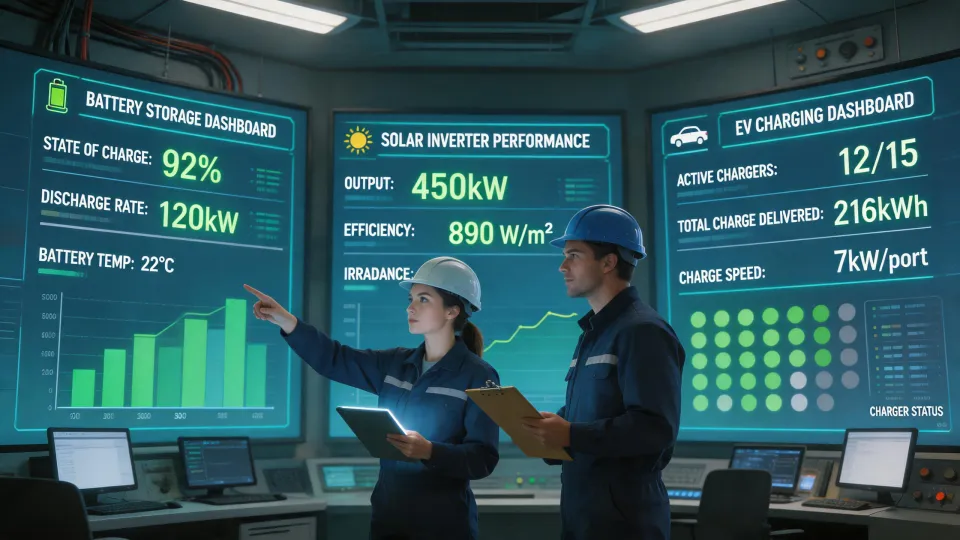
As a quality inspector, I don't care which brand you buy—Huawei, another reputable OEM, whatever. I care that the product you receive meets the intended spec consistently, over the expected lifetime. The industry is moving toward integrated digital solutions: inverters that talk to batteries that talk to EV chargers, all managed from a single app. That's not just a trend; it's a shift in how energy is managed.
If you're shopping for EV charger plugs or a 16kW system, stop asking 'what's the price?' and start asking 'what happens when something goes wrong?' Because in my four years of reviewing this stuff, that's where the real cost hides.
Ask a related engineering question