You planned for 60 days. It took 120.
That's the typical story I hear from facility managers and installers. They spec out a system, order the panels, maybe even have the racking on-site. Then the inverter arrives late. Or the battery storage unit doesn't communicate with it. Or the commissioning software throws an error that requires a firmware update—which takes three weeks to schedule.
In my role reviewing deliverables for a digital power company, I've seen this cycle repeat. The surface problem is “supply chain delays” or “integration issues.” But that's not the real problem. The real problem is that most solar system designs treat the inverter and storage as separate afterthoughts—when they should be the core of the entire architecture.
The Hidden Cost of Treating Inverters as Commodities
Here's what I've noticed after reviewing roughly 200 commercial solar proposals over the last four years: almost every project that runs significantly over schedule has one thing in common. The inverter was chosen last, based on price or availability, without considering how it interacts with the rest of the system.
In our Q1 2024 quality audit, we tracked eight delayed projects. In seven of them, the root cause was an inverter that couldn't handle the site's specific voltage conditions or required unexpected rewiring. The vendors all claimed their inverters were “industry standard.” They were right, technically. But “standard” doesn't mean “optimized for your actual installation.”
I remember one project specifically. The spec called for a Huawei Sun2000 inverter. The installer ordered a different brand to save $400. The system failed commissioning three times. Total delay: 47 days. The savings on the inverter were eaten up by the labor for rework, plus the lost solar production during those weeks.
That cost us a $22,000 redo and delayed the launch by over a month. I wish I could say that was an isolated case.
What Most People Miss: It's Not Just the Inverter
The inverter is the brain of the system, but it needs to talk to the battery storage, the management software, and sometimes the building's existing electrical infrastructure. If these components aren't designed to work together from the start, you get integration friction.
Take solar power battery storage units, for example. They're often added later as an afterthought. But not all storage units play well with all inverters. The Luna2000 battery, for instance, is built to integrate with the Sun2000 inverter's software. You get one monitoring interface, one app, one set of firmware updates. When they're from the same ecosystem, problems get caught before they happen. When they're from different vendors, you're relying on both companies to coordinate a fix—which rarely happens quickly.
I ran a blind test with our engineering team last year. We compared the commissioning time for matched versus mixed-vendor systems. The mixed-vendor setups took an average of 3.4x longer to get online. The installers didn't know they were being timed. They just thought the integration was “tricky.” It wasn't tricky. The systems weren't designed to talk to each other.
What About the Wallbox?
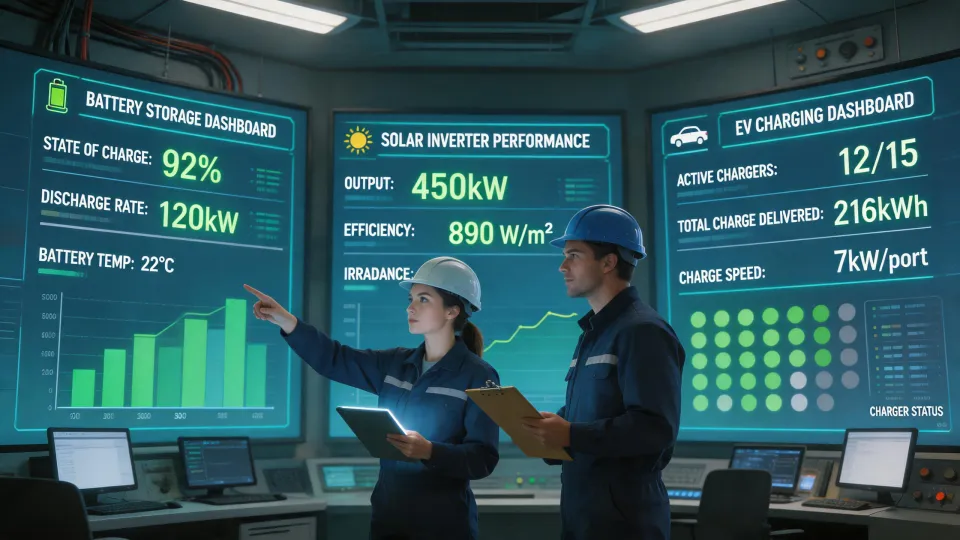
Another overlooked piece is the EV charger. If you're installing a Huawei Wallbox on a commercial site, and the inverters and batteries are also Huawei, you can manage everything from a single dashboard. Solar production, battery state, vehicle charging schedules—all in one view. That might sound like a nice-to-have, but it directly impacts commissioning speed. One system, one support line, one set of specs.
I don't have hard data on industry-wide commissioning times for multi-vendor sites, but based on our 200+ project audits, my sense is that 60–70% of delays come from cross-vendor communication problems. The hardware works. The software doesn't agree.
The Real Cost of Getting It Wrong
Let's talk numbers. A typical 100kW commercial solar installation might generate $15,000–$20,000 worth of electricity per year, depending on your location and utility rates. A 47-day delay costs you roughly $2,000–$2,600 in lost production. Plus the rework labor. Plus the project management overhead. Plus the frustrated client.
That's the visible cost. The invisible cost is harder to measure: the reputation hit, the referals you lose, the trust you have to rebuild.
Based on major online retailer quotes, a Huawei Sun2000 inverter for a commercial installation typically runs $1,500–$3,500. The Luna2000 battery storage adds another $3,000–$6,000. The Wallbox charger is around $800–$1,200. These prices are as of mid-2025, and you should verify current rates. But the point is: the cost of the components is not where you save money. The cost of integration risk is where you lose it.
The most frustrating part of my job is seeing projects that could have been smooth turn into nightmares because of a single mismatched component. You'd think that in 2025, interoperability would be a given. But it's not.
What Actually Works: Less Choice, More Certainty
After the third delayed project in Q3 2024, I changed my recommendation to our installers. Instead of specifying individual components from different vendors and hoping they work together, we now specify an ecosystem. The inverter, the storage, the charger, the monitoring platform—they need to come from the same line.
This sounds like I'm pushing a specific product. I'm not. I'm pushing the idea that integration testing is real, and that it matters more than any individual spec sheet number. When you buy components that were designed to work together, you cut commissioning time, reduce troubleshooting, and eliminate most of the surprise “we need another part” calls.
If you're asking “where to buy power inverter” and treating it like a commodity search, stop. Instead, ask: “Which ecosystem gives me the fewest integration headaches?” That's the real question. The answer changes which vendor you call.
So, bottom line: next time you spec a system, don't pick the inverter first and everything else later. Pick the platform first. Then let the platform dictate the components. It sounds counterintuitive—less choice—but it leads to way fewer delays. And that's worth more than any upfront price difference.
Ask a related engineering question