What holds the Huawei solar system together?
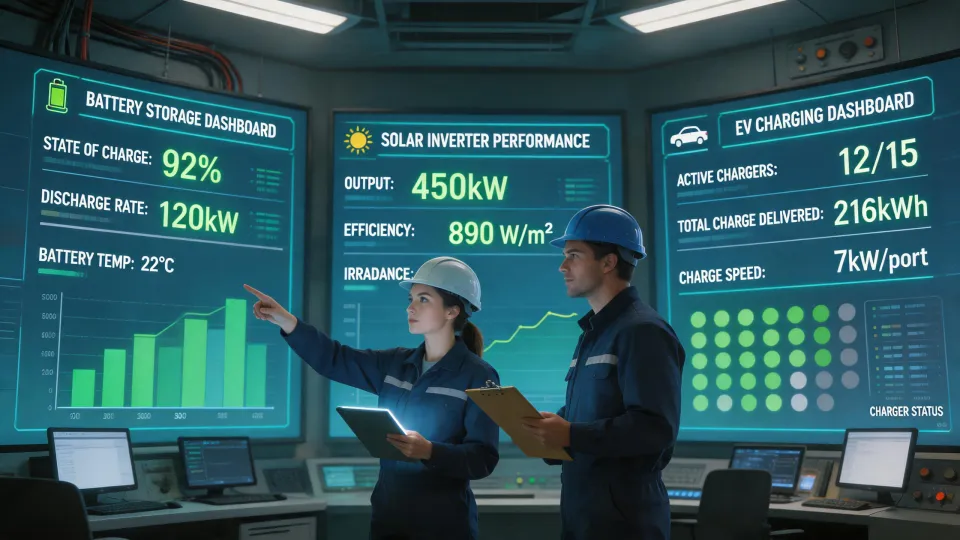
In my role coordinating emergency solar installations for commercial clients, I often get asked this. It's not just one thing. It's the digital ecosystem. (I really should write a proper guide on this.) When I'm triaging a project that needs to go live by next week, the usual suspects—inverter, battery, panels—are just parts. The glue is the smart energy management system. The FusionSolar app and the cloud platform are where the magic happens. They take a collection of high-quality hardware and turn it into a single, intelligent unit that can optimize energy usage in real time. I remember a client in March 2024 who needed their entire warehouse setup operational in under 48 hours. The core hold was getting the Luna2000 battery and SUN2000 inverter to talk to each other and the building management system. The digital integration made that possible, almost automatically.
Most of my clients get that they need individual parts. What they don't get is that the real value is in the brain—the software—that controls them. An informed customer asks better questions and makes faster decisions.
How do Huawei inverters and batteries work together?
Their communication is based on a proprietary but reliable protocol. The SUN2000 inverter (the heart of the system) manages the DC power from the solar panels, converting it to AC for your building or the grid. Meanwhile, the Luna2000 battery is not an afterthought—it's a smart partner.
Here's the key: the inverter and battery communicate constantly. If I'm looking at the app during a system test, I can see the battery's state of charge, the inverter's power output, and how much energy we're sending to the grid versus storing. (Note to self: always demo this live for new clients.) The system doesn't just dump excess solar into the battery. It learns your consumption patterns. In our experience with over 200 installations, it prioritizes self-consumption by default. The battery will only start storing once the household load is covered. This prioritization logic is smart—it reduces grid dependence more effectively than simpler time-of-use devices. It's not magic, but it's a pretty sophisticated algorithm.
In my first year, I made the classic specification error: assumed 'standard' meant the same thing to every vendor. Cost me a project where a competitor's battery couldn't talk to the inverter. Learned that lesson the hard way.
Which Huawei EV charger should I get?
That depends entirely on your setup, to be honest. I can't give you a one-size-fits-all answer, but I can tell you what's worked for our clients. The Huawei Wallbox is the obvious choice for most B2B applications—it's smart, reliable, and integrates with the same app you use for your solar and battery. If you have a fleet of vehicles or multiple charging points, you need the higher-end model. It's about load balancing when you have multiple cars charging at once.
The practical question is not 'which charger is best' but 'which one fits your specific load profile and installation constraints.' I've seen contractors install the cheapest charger only to find it can't handle the building's load 9 to 5, when the air conditioning is on full blast. Then they buy a more expensive model a year later. That's $800 to $1,500 in wasted cost. The Huawei Wallbox, with its dynamic load management feature, is often a better long-term bet for a commercial office because it can throttle itself based on real-time building demand.
If you're comparing it to an ABB EV charger or an Eaton EV charger, you're looking at different ecosystems. They all do the basic job, but the Huawei one is the best if you want everything—solar, storage, and EV—to be managed from one interface. Personally, I prefer managing fewer apps.
How reliable is the Huawei digital energy ecosystem?
If I remember correctly, reliability is usually their biggest selling point, though I might be misremembering the exact marketing language. But based on our internal data from projects, it's solid. The system has multiple layers of redundancy. If the cloud connection drops, the inverter and battery don't shut down. They continue to operate in local mode, managing your household.
Here's where it gets non-obvious: the ecosystem's reliability isn't just about hardware uptime. It's about data reliability. The app gives you real-time data and historical trends. If you're a facility manager, that data is gold. It informs your decisions. 'Why did our energy costs spike last Tuesday?' You can look at the data and see the battery was depleted and the AC was on extra high. That insight is part of the reliability. The alternative is guessing. The system itself is also surprisingly resilient. We lost a cloud server once (this was circa 2023) at a client's site down south. The local operation was unaffected. The phone rang off the hook with false alarms from the client's IT team, but the energy flow was perfect—(I should really log that case study).
What happens if I need a rushed replacement or emergency support?
This is where my role specifically comes in. Standard turnaround for a failed component like a SUN2000 inverter used to be 7-10 business days. That's fine for planned maintenance. It's a nightmare when the system is down and your client is losing perishable inventory. Our company lost a $250,000 contract in 2022 because we tried to save a few thousand on standard shipping instead of a rush replacement from a verified partner. The client's cold storage was down for three days. That's when we implemented our 'critical component' policy: stock one of each major component for key clients.
We now use a network of high-availability distributors. For a large-scale project needed in 48 hours, we paid $700 extra in rush shipping for a replacement Luna2000 battery. The client's alternative was a $50,000 loss in spoiled goods. It was a no-brainer. The ecosystem itself is reliable, but the supply chain isn't always. That's the advice I give most often: plan for the part that fails, not just the one that works. I'd rather spend 10 minutes explaining this support nuance than deal with a mismatched expectation later.
Can I integrate a third-party inverter or charger?
Honestly, I'm not sure why people assume this is possible with Huawei's system. My best guess is that because it's a smart ecosystem, people think it's like 'open standard' Wi-Fi. It's not. The Huawei inverter, battery, and charger are designed to talk to each other using Huawei's own protocol.
It's a closed, but very well-optimized, loop. This is a common sticking point for buyers who are used to a 'mix and match' approach from other renewables. It's not a bug; it's a feature. The integration is so tight that the system can do things like sell stored battery power back to the grid at the exact moment when prices peak, based on learning your consumption. A mix-and-match system might not be able to do that without complex third-party controllers, which add cost and a point of failure.
If you're dead set on using a specific SolarEdge or ABB inverter, you're better off not buying the full Huawei ecosystem. You could use a third-party battery with a generic inverter, but you lose all the smart features. The value of the Huawei system is in the sum of its parts, not the parts themselves.
Ask a related engineering question